
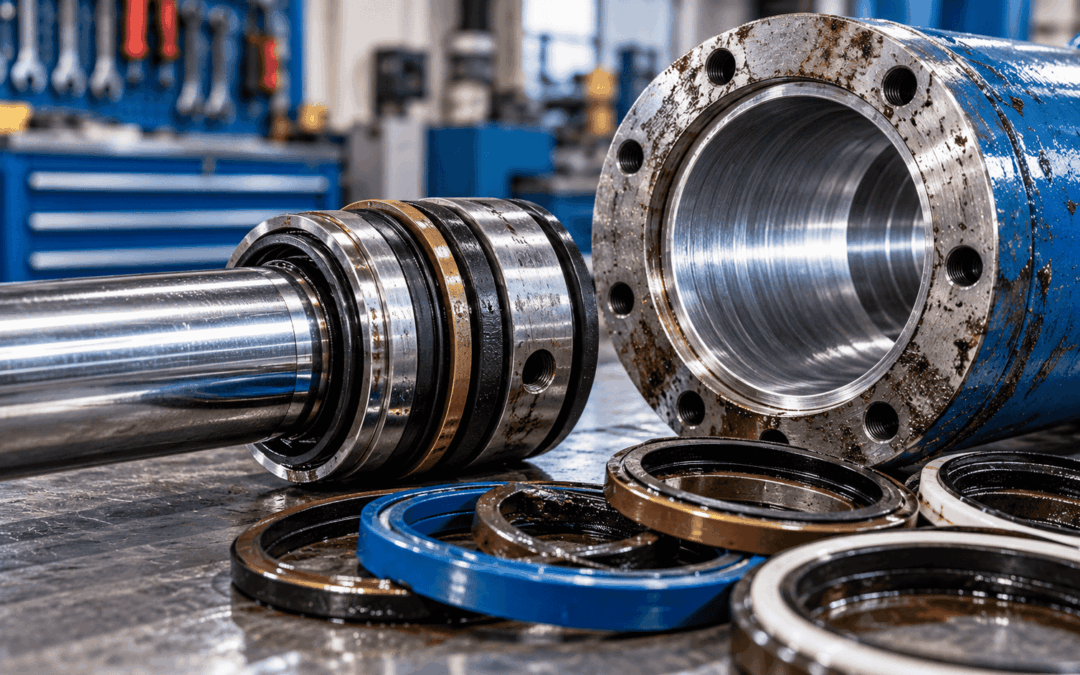
Hydraulic Online · Cylinder Troubleshooting & Reliability
Hydraulic Cylinder Seal Failure Explained: Causes, Symptoms & Prevention
Why hydraulic cylinder seals fail, how to recognise damage patterns, what to inspect before replacing a seal kit, and how to prevent repeat leakage and premature wear.
Explore the Causes Check the Symptoms Diagnosis ChecklistA practical engineering guide for maintenance teams, engineers and hydraulic cylinder owners.
Quick Answer
What causes hydraulic cylinder seal failure?
Hydraulic cylinder seal failure occurs when a piston seal, rod seal, wiper or associated sealing component can no longer perform its intended function.
Common causes include contaminated fluid, damaged rod or barrel surfaces, excessive temperature, pressure spikes, incorrect seal selection, installation damage and poor cylinder alignment.
In one sentence: seal failure is often the result of an underlying operating, material or mechanical problem, so replacing the seal without investigating the cause can lead to another failure.
Explore This Guide
Hydraulic cylinder seal failure topics
01 · Seal Functions
Understand the sealing system →02 · Failure Symptoms
Recognise warning signs →03 · Root Causes
Why seals deteriorate →04 · Damage Patterns
Read the evidence →05 · Diagnosis
Inspection steps →06 · Prevention
Reduce repeat failures →Understanding the Sealing System
Which seals are used in a hydraulic cylinder?
A hydraulic cylinder normally uses several sealing and guidance components with different jobs. Not every leakage or movement problem points to the same seal.
Rod Seals
Limit pressurised oil escaping where the piston rod passes through the gland. Rod scoring, misalignment or seal-lip damage can contribute to external leakage.
Piston Seals
Help separate pressure zones on opposite sides of the piston. Excessive bypass may reduce load-holding performance or contribute to unwanted movement, depending on the hydraulic circuit.
Wipers & Static Seals
Wipers help exclude external dirt from the gland. Static seals prevent leakage at stationary joints, while wear rings and bearings guide components rather than serving as primary pressure seals.
Warning Signs
Common symptoms of hydraulic cylinder seal failure
Oil Leaking Around the Rod
Visible oil at the gland can indicate rod seal damage, poor rod surface condition, excessive pressure or other sealing problems.
Drift or Poor Load Holding
Internal leakage across the piston may contribute to movement or reduced holding ability, but valves and the wider circuit can cause similar symptoms.
Reduced Force or Erratic Operation
Leakage, aeration, friction or other system faults can affect performance. Seal condition is one of several possible causes.
Repeated Seal Replacement
A cylinder that leaks again soon after resealing may have an unresolved issue with alignment, contamination, grooves, guidance or surface finish.
Scoring & Uneven Wear
Rod or barrel damage can abrade seals and may signal contamination, inadequate guidance or side-loading.
Hardening, Cracking or Extrusion
Physical damage found during disassembly can indicate thermal, chemical, pressure or installation-related problems.
Root Cause Analysis
Seven common causes of hydraulic cylinder seal failure
1. Fluid Contamination
Abrasive particles can score sealing surfaces and accelerate wear. Contamination can also become embedded in seal material.
2. Excessive Temperature
Temperatures outside the seal material's operating range may cause hardening, loss of elasticity or accelerated deterioration.
3. Pressure Spikes & Extrusion
Pressure peaks, excessive clearance or inadequate seal support can force sealing material into gaps, causing tearing or extrusion damage.
4. Damaged Running Surfaces
Scored rods, rough barrel bores, corrosion and damaged coatings can rapidly abrade or cut sealing lips.
5. Incorrect Seal Selection
Unsuitable dimensions, material, fluid compatibility or pressure capability can cause early failure even when installation appears correct.
6. Misalignment & Side-Loading
Uneven loading can increase friction, distort sealing contact and accelerate wear in the gland and piston guidance systems.
7. Installation Damage
Sharp edges, incorrect assembly methods, trapped seals and damaged grooves can cause failure immediately or shortly after commissioning.
Inside the Workshop
What failed hydraulic cylinder seals can reveal
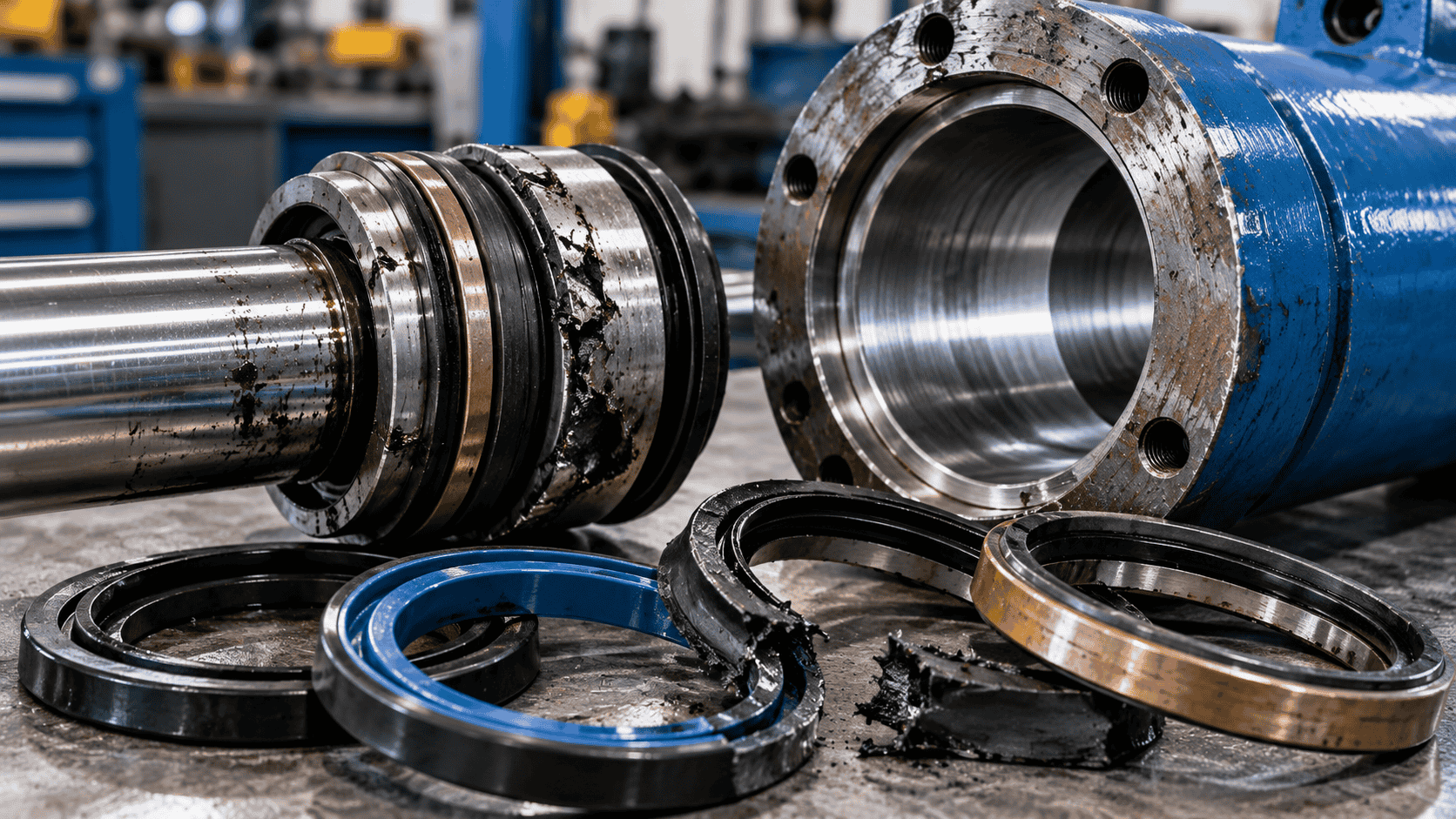
When a cylinder is dismantled, the condition of the seals can provide useful evidence about the operating conditions and mechanical problems that led to failure.
Abrasive wear may suggest contamination. Torn edges can point towards installation damage or extrusion. Hardened seals may indicate excessive heat, chemical incompatibility or ageing.
However, the appearance of a damaged seal is not conclusive on its own. Rod and barrel condition, seal grooves, clearances, fluid condition and the hydraulic circuit must also be considered.
Technical Diagnosis
Hydraulic seal damage patterns and possible causes
The table below provides a starting point for investigating seal failures. The same damage pattern may have more than one cause.
| Damage Pattern | Possible Causes | Recommended Inspection |
|---|---|---|
| Abrasive wear | Contaminated fluid, dirt entering past the wiper, rough running surfaces | Check fluid cleanliness, rod finish, bore condition and wiper |
| Seal extrusion | Excessive clearance, pressure peaks, inadequate support | Inspect extrusion gaps, wear rings, operating pressure and seal specification |
| Hardening or cracking | High temperature, incompatible fluid, ageing | Review fluid type, temperature history and seal material |
| Torn or cut lips | Sharp assembly edges, installation damage, scoring | Inspect groove edges, rod surfaces and assembly procedures |
| Uneven wear | Side-loading, poor alignment, worn guidance | Check gland bearings, piston wear rings and mounting geometry |
| Swelling or softening | Fluid incompatibility or chemical exposure | Verify seal material against the actual fluid and operating conditions |
| Repeated early leakage | Unresolved surface damage, poor installation, incorrect seal selection | Inspect the complete sealing system rather than replacing seals alone |
Contamination & Surface Condition
Why damaged rods and barrels destroy hydraulic seals
Rod Surface Damage
The piston rod passes repeatedly through the rod seal and wiper. Scoring, corrosion, pitting or damaged plating can cut or abrade the sealing lips, eventually leading to external oil leakage.
Replacing the seal without addressing significant rod damage can lead to another premature failure.
Cylinder Rods ExplainedBarrel Bore Damage
The piston sealing system operates against the internal barrel surface. Poor bore geometry, scoring and unsuitable surface finish can increase wear, friction and internal leakage.
Bore condition should be checked during cylinder refurbishment, particularly where repeat piston seal failures occur.
Machining StandardsPressure, Temperature & Materials
How operating conditions affect seal life
Hydraulic Pressure
Pressure spikes and excessive clearances can cause seal extrusion, while inappropriate seal designs may not withstand the application's duty cycle.
Operating Temperature
Heat can accelerate ageing and hardening. Low temperatures may also affect flexibility and sealing behaviour, depending on the material.
Fluid Compatibility
Seal compounds must be compatible with the hydraulic fluid, additives and environmental exposure. Incompatible materials may swell, soften or degrade.
Practical Inspection
How to diagnose hydraulic cylinder seal failure
Before replacing a seal kit, investigate the cylinder and its operating conditions. The following sequence provides a practical framework for qualified hydraulic maintenance personnel.
Identify the symptom
Establish whether the issue is external leakage, internal bypass, poor movement, drift or repeated premature wear.
Make the equipment safe
Follow the machine manufacturer's isolation and stored-energy procedures. Support loads and ensure hydraulic pressure is safely released before dismantling.
Inspect visible surfaces
Check the exposed rod, gland area, mountings and external connections for leakage, corrosion, scoring or mechanical damage.
Assess the hydraulic circuit
Investigate valves, pressure control, load-holding components and other possible system faults before attributing every symptom to cylinder seals.
Inspect dismantled components
Examine seals, grooves, wear rings, bearings, rod and barrel surfaces for abnormal wear or damage.
Measure critical dimensions
Check relevant clearances, surface condition, alignment and component dimensions against the applicable cylinder and seal specifications.
Confirm the root cause
Review contamination, pressure, temperature, fluid compatibility, installation practices and mechanical loading before deciding on repair.
Repair and verify
Replace or refurbish affected components as required and perform suitable checks and testing before returning the cylinder to service.
Reliability & Maintenance
How to prevent repeat hydraulic cylinder seal failures
Maintain Fluid Cleanliness
Use appropriate filtration, clean maintenance practices and contamination controls suited to the application.
Protect Running Surfaces
Inspect rods for corrosion, scoring and impact damage. Address significant surface defects before fitting replacement seals.
Match Seals to the Application
Consider pressure, temperature, fluid chemistry, movement, speed and cylinder geometry when selecting replacement seals.
Check Guidance & Alignment
Address excessive bearing clearance, mounting problems and repeated side-loading.
Use Correct Installation Practices
Clean components, inspect grooves and edges, use suitable tools and follow the seal supplier's instructions.
Investigate Repeat Failures
Record the damage pattern and operating conditions rather than fitting the same seal kit repeatedly.
Repair or Replacement
Can a hydraulic cylinder with failed seals be repaired?
Often, yes. A seal replacement may restore performance where the cylinder's rod, barrel, gland, piston, grooves and guidance remain within specification. If those components are damaged or worn, a more comprehensive refurbishment may be necessary.
Severe scoring, corrosion, distortion or repeated failures can change the repair decision. The most reliable approach is to assess the cylinder as an assembly and correct the underlying cause before returning it to service.
Key Engineering Takeaway
A failed seal is a symptom as well as a component defect. Effective repair depends on understanding why it failed and whether the mating surfaces, operating conditions and cylinder geometry remain suitable.
From Engineering Knowledge to Workshop Support
Need help with a leaking or damaged hydraulic cylinder?
Hydraulic Online explains the engineering behind seal failure. Completely Hydraulic provides practical support for hydraulic cylinder and ram inspection, repair, refurbishment and manufacture.
Visit Completely Hydraulic Contact Hydraulic OnlineBefore Requesting a Repair
Useful information includes the cylinder application, symptoms, visible damage, operating pressure where known, fluid type and any history of repeat seal failures.
These details can help identify whether a reseal, component refurbishment or more extensive assessment is appropriate.
Frequently Asked Questions
Hydraulic cylinder seal failure FAQs
What is the most common cause of hydraulic cylinder seal failure?
There is no single cause for every application. Contamination, surface damage, unsuitable operating conditions, incorrect seal selection and mechanical misalignment are all important contributors.
Can hydraulic cylinder seals fail without an external oil leak?
Yes. A worn piston seal can allow internal bypass without visible external leakage. The effect on cylinder movement depends on the circuit and operating conditions.
Why do new hydraulic cylinder seals fail quickly?
Early failure can result from installation damage, incorrect seal selection, rough or damaged running surfaces, contamination, excessive clearances or unresolved side-loading.
Can overheating damage hydraulic cylinder seals?
Yes. Temperatures beyond the seal material's intended range can accelerate ageing, hardening and loss of sealing performance. Fluid compatibility and duty cycle also matter.
Does a drifting cylinder always have a failed piston seal?
No. Internal piston leakage is one possibility, but control valves, load-holding components and other circuit faults can produce similar symptoms.
Should seals be replaced if the piston rod is scored?
The rod and sealing system should be assessed together. Fitting new seals against a damaged rod may lead to repeat leakage or premature seal wear. Rod repair or replacement may be necessary.
Hydraulic Cylinder Engineering Knowledge
Diagnose the cause, not just the damaged seal
Understanding contamination, pressure, temperature, surface condition and alignment helps prevent repeat hydraulic cylinder failures.
Troubleshoot a Cylinder Explore More Resources