
Why Hydraulic Cylinders Fail
A practical guide to the most common hydraulic cylinder failures: external leaks, drift (internal bypass), scoring and early seal wear, plus the root causes linked to contamination, alignment, materials and machining.
Built to support the hydraulic cylinder manufacturing expertise of Completely Hydraulic. Contact us if you want help diagnosing a fault or specifying a cylinder build.
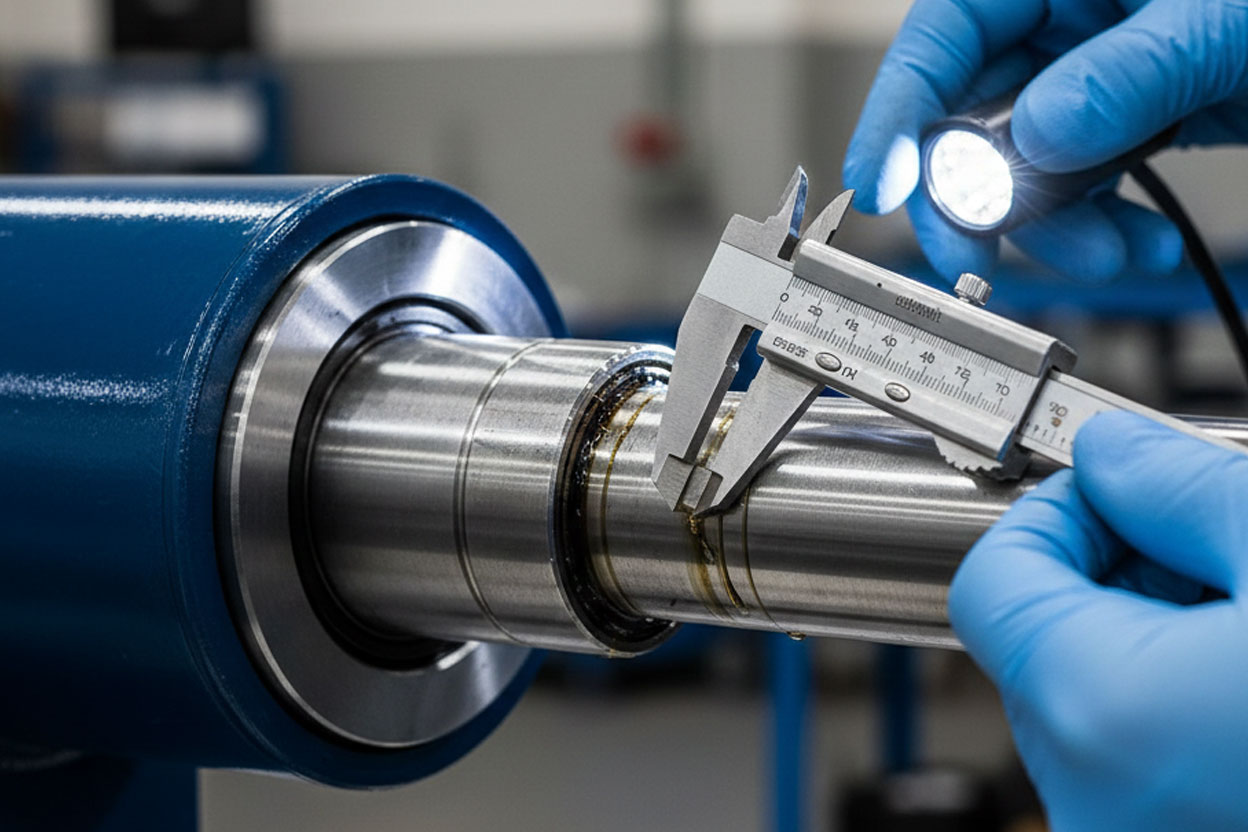
Quick answer: why do hydraulic cylinders fail?
Most hydraulic cylinder failures are caused by a combination of contamination, rod damage, seal system mismatch, and alignment/side-load. These issues lead to external leaks, internal bypass (drift/creep), scoring and overheating.
Guide contents
Jump straight to the symptom or failure pattern you’re dealing with.
Read this before you strip the cylinder
A reseal can fix symptoms, but if you don’t address the root cause (finish, alignment, contamination), the cylinder often fails again.
- Weeping/leaks: rod finish, seal damage, installation damage, pressure spikes
- Drift/creep: piston bypass, bore finish/geometry, piston stability
- Scoring: contamination past wiper, poor guidance, side-load
- Repeat failures: mismatch between environment and spec
Related pages: Tolerances & Machining Standards · Cylinder Materials Explained
1) Fast diagnosis map (symptom to likely cause)
Use this quick table to narrow down the most likely fault path. It’s designed for practical on-site diagnosis.
| Symptom | Most likely cause | What to check first |
|---|---|---|
| Oil leaking at rod end | Rod seal wear/damage, rod pitting/scoring, wrong seal compound | Rod condition, wiper condition, seal lips for cuts/tears |
| Cylinder drifts/creeps under load | Piston seal bypass, worn bore, piston instability | Internal bypass test, bore finish/geometry, piston wear rings |
| Rod scoring | Contamination past wiper, side-load, poor guidance | Wiper, bearing length, alignment, contamination source |
| Stick-slip / judder | Poor finish, wrong seal material, contamination, dry running | Surface finish, oil condition, seal kit spec, lubrication |
| Overheating | High friction from poor finish/misalignment, bypass, over-pressure | Temperature, pressure settings, bypass signs, movement smoothness |
Want to understand why machining matters? Read: Tolerances & Machining Standards.
2) External leaks (what’s really happening)
External leaks are usually caused by the sealing system losing its ability to maintain a controlled oil film. That can be simple wear, but just as often it’s rod damage, contamination or seal mismatch.
Rod seal wear
Normal wear over time, accelerated by heat, poor finish or the wrong seal compound for the job.
Corrosion/pitting
Pitted rods damage seal lips on every stroke and quickly create persistent weeping.
Side-load damage
Misalignment forces the rod into bearings and seals, increasing wear and causing uneven failure patterns.
3) Drift / creep (internal bypass)
If a cylinder moves under load with no visible leak, that’s commonly internal bypass. Oil is slipping past the piston seals from one side to the other, so the cylinder can’t hold position.
Common causes of drift
- Piston seal wear or incorrect seal kit selection
- Bore finish/geometry issues (out-of-round bores cause uneven seal compression)
- Piston instability due to worn wear rings/guidance
- Contamination scoring creating leakage paths
Related: Tolerances & Machining Standards
Quick bypass check (simple logic)
- If it drifts only under load, suspect piston bypass first.
- If it drifts and the oil runs hot, suspect bypass + friction.
- If it drifts after a reseal, suspect bore geometry or guidance.
Materials can influence this too: Cylinder Materials Explained
4) Scoring & surface damage
Scoring is normally contamination plus movement. If dirt enters the cylinder, it gets dragged through seals and across surfaces. Once scoring starts, seals wear faster, leakage paths open up, and the cylinder becomes less efficient.
Wiper failure
If the wiper lets grit in, the rod becomes the sanding tool that destroys the seal system.
Contamination
Dust, slurry, cement and metal swarf can quickly score rod and bore surfaces under load.
Side-load
Misalignment pushes the rod into bearings and seals, increasing contact pressure and surface damage.
5) Heat, friction & accelerated wear
Heat often shows up after the underlying issue has already started. High friction and bypass turn energy into heat, and that heat hardens seals, reduces oil performance and accelerates wear.
Typical contributors
- Poor surface finish increasing friction
- Misalignment increasing side-load and seal drag
- Internal bypass causing constant energy loss
- Over-pressure and pressure spikes accelerating extrusion damage
If you want the machining explanation: Tolerances & Machining Standards
What heat does to seals
- Hardening and loss of elasticity
- Swelling or shrinking depending on compound and oil
- Cracking and rapid lip wear
- Increased leakage and stick-slip
6) The 4 root causes behind most cylinder failures
Most failures are symptoms. The root cause is usually one of these four categories, or a combination.
Contamination
Dirt past the wiper scores surfaces and destroys seals. Oil cleanliness matters more than most people think.
Alignment / side-load
Using the cylinder as a guide forces the rod into seals and bearings, causing uneven wear and scoring.
Materials & protection
Wrong rod protection or seal compound for the environment leads to pitting, swelling, hardening and leaks.
Machining / tolerances
Bore geometry, finish and groove quality determine how seals behave under pressure and heat.
7) Prevention checklist (copy/paste)
Use this list to reduce repeat failures. It’s written to be practical.
Copy/paste checklist
- Confirm the symptom: external leak vs internal drift vs scoring vs overheating.
- Inspect the rod: pitting/scoring will destroy new seals quickly.
- Inspect the wiper: if grit can enter, the cylinder will fail again.
- Check side-load: is the cylinder being used as a guide or carrying misaligned load?
- Match seal compound: oil type, temperature and contamination should drive seal choice.
- Confirm bore quality: finish and geometry must suit the piston seal system.
- Verify pressure settings: spikes and over-pressure accelerate extrusion and wear.
Back to the hub: Hydraulic Cylinder Manufacturing Guide
Need help diagnosing a cylinder fault or preventing repeat failures?
Hydraulic Online is the knowledge hub. For real-world cylinder manufacturing support, Completely Hydraulic can help diagnose faults, specify the right materials and finishes, and build cylinders to suit real working environments.
- OEM replacements and bespoke cylinder builds
- Rod replacements, reseals and full ram rebuilds
- Pressure testing and certification available
- Cylinder builds are performed in the Essex depot and shipped anywhere in the UK
If you want this CTA to point to comphydraulic.com, replace the button links above.
Keep this cluster strong (internal links)
These pages support the knowledge hub structure and improve topical authority.
- Hydraulic Cylinder Manufacturing Guide
- How Hydraulic Cylinders Are Manufactured
- Hydraulic Cylinder Materials Explained
- Tolerances & Machining Standards
- Contact
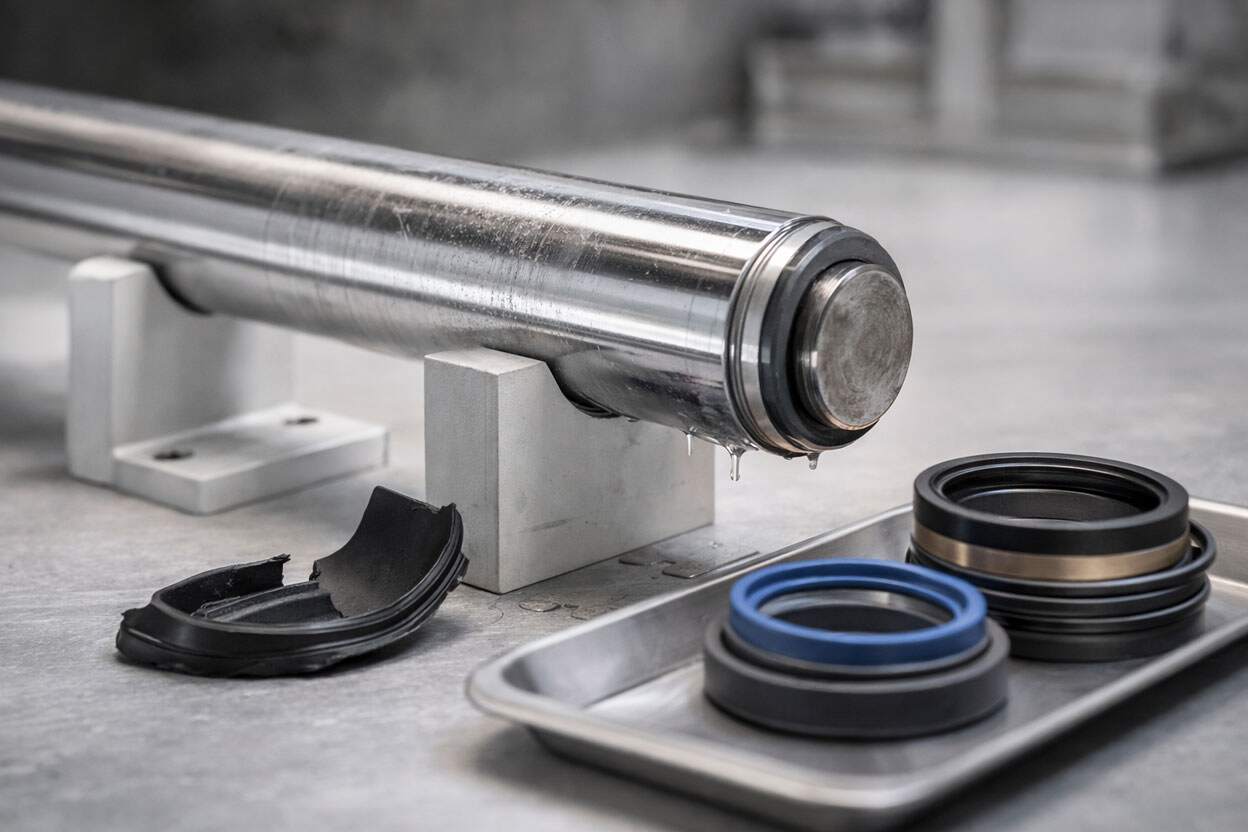
Failure example
A typical pattern: contamination past the wiper leads to scoring, which damages seals and causes repeat leaks or bypass.
Why hydraulic cylinders fail FAQs
Short answers written to work well for AI results and “People Also Ask”.
What is the most common cause of hydraulic cylinder failure?
Contamination is one of the most common root causes. Dirt past the wiper scores surfaces and damages seals, leading to leaks, bypass and rapid wear.
Why does a hydraulic cylinder leak from the rod?
Rod leaks are commonly caused by rod seal wear, rod pitting/scoring, contamination damaging seal lips, or a seal compound that doesn’t suit the temperature and oil type.
Why does a hydraulic cylinder drift or creep with no external leak?
Drift is typically internal bypass past the piston seals. Bore finish/geometry, piston stability and wear-ring guidance can all influence how quickly bypass develops.
What causes rod scoring on a hydraulic cylinder?
Rod scoring is often caused by contamination entering past the wiper, side-load forcing the rod against bearings/seals, or poor guidance that allows uneven contact under load.
How can I stop a hydraulic cylinder failing repeatedly?
Fix the root cause: improve contamination control (wiper/oil cleanliness), check alignment and side-load, confirm rod and bore finish, and match seal materials to the environment and temperature.