
Hydraulic Cylinder Materials Explained
A practical guide to the materials used in hydraulic cylinder manufacturing — barrel tube, rod, piston and seal compounds — plus what to choose for corrosion, wear, pressure and real-world working conditions.
Built to support the hydraulic cylinder manufacturing expertise of Completely Hydraulic. Contact us if you want help specifying a cylinder build.
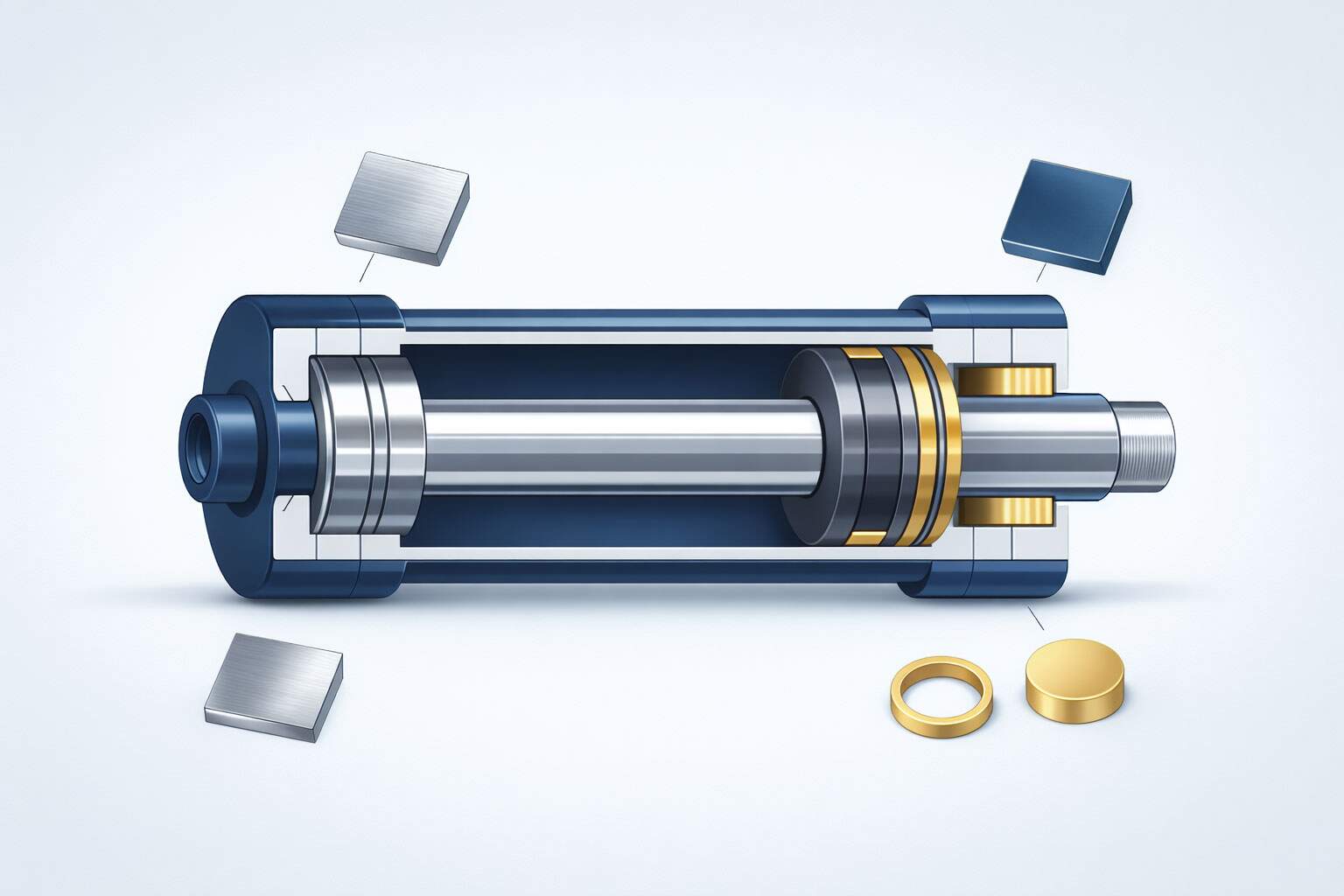
Quick answer: what materials are hydraulic cylinders made from?
Most hydraulic cylinders are made from steel components: a honed steel tube barrel, a high-strength steel rod (often chrome plated), a steel piston, and a sealing system made from polyurethane, nitrile (NBR), PTFE blends, or FKM, depending on temperature, oil type, and contamination risk.
Guide contents
Use this to jump to the exact section you need — written for fast, practical understanding.
A practical way to choose materials
Don’t start with “what’s standard”. Start with where it works and what it must survive.
- Corrosion risk: salt spray, washdown, fertiliser, coastal air.
- Contamination risk: dust, grit, slurry, cement, wood-chip, metal swarf.
- Temperature: cold starts, heat soak, continuous high temp oil.
- Duty: light positioning vs heavy shock loads and side-load.
This page supports the pillar: Hydraulic Cylinder Manufacturing Guide.
1) Why materials matter in hydraulic cylinders
Material selection impacts seal life, leak risk, corrosion resistance, and how long the cylinder runs before scoring, bypass, or drift. In practice, most premature failures come from a mismatch between the environment and the rod finish / seal system, or from poor bore finish quality.
Corrosion resistance
Coatings and material choices determine whether rods pit, chrome lifts, and seals start to weep early.
Seal compatibility
Seal compounds must match oil type and temperature. The “wrong” seal material can harden, swell, or tear.
Wear & finish
Bore finish and rod surface finish control friction, heat, and whether seals bed in properly or burn out.
2) Cylinder barrel (tube) materials
The barrel contains pressure and provides the running surface for piston seals and wear rings. Most quality barrels are made from honed steel tube with the correct internal finish and geometry (roundness and straightness).
Common barrel tube options
| Material / tube type | Why it’s used | Watch-outs |
|---|---|---|
| Honed steel tube | Provides a smooth bore finish that supports sealing, reduces friction, and improves service life. | Quality varies. Poor roundness or rough finish accelerates bypass and heat. |
| DOM / precision tube | Consistent wall thickness and good machinability for some cylinder types. | Still needs the correct bore finish for sealing performance. |
| Upgraded / protected tube | Used where corrosion risk is higher or external protection is required. | Specify environment early. Protection choices affect lead time and cost. |
Practical check: a “good” bore finish supports seal bedding and reduces heat. A “bad” bore finish eats seals quickly.
What “good” bore finish achieves
- Lower friction and cooler running
- Better seal life and reduced weeping
- More stable hold (less bypass / drift)
- Reduced scoring risk during contamination events
Next step reading: Tolerances & Machining Standards
3) Rod materials & coatings (what really matters)
The rod is where many cylinders win or lose. A rod needs strength, a seal-friendly finish, and the right protection for the environment. Rod damage often starts with wiper failure and contamination that leads to scoring.
Steel rod core
High-strength steel provides load capacity. Straightness and surface quality are crucial for seal performance.
Chrome plating / coatings
Protects against wear and corrosion. Correct thickness and finish helps seals last longer and reduces weeping.
Wiper + contamination
If the wiper lets grit in, the rod becomes the sanding tool that destroys the seal system.
4) Piston materials (and why design matters more than you think)
Pistons are commonly steel, designed around the seal system and wear-ring guidance. The piston must stay stable under pressure, maintain groove integrity, and support the seals without distortion.
Typical piston choices
- Steel pistons: common for durability and high pressure.
- Lightweight designs: used in some applications where mass matters.
- Wear-ring guided pistons: reduce metal contact and improve stability.
Piston performance depends heavily on tolerances and guidance plus the wear-ring system.
Symptoms linked to piston / bypass
- Cylinder creep / drift under load with no external leak
- Loss of force and higher oil temperature
- Inconsistent motion during holding or positioning
Related page: Why Hydraulic Cylinders Fail
5) Seal materials: NBR, PU, PTFE and FKM (Viton)
Seals are not “one kit fits all”. Oil type, temperature, speed, pressure and contamination all influence what seal materials make sense. The wrong compound can swell, harden, or tear — even if the machining is perfect.
| Seal material | Where it’s commonly used | Strength | Watch-out |
|---|---|---|---|
| NBR (nitrile) | General hydraulic applications | Good all-round compatibility | Not ideal for very high temperatures |
| PU (polyurethane) | Rod seals / wipers where wear resistance is key | Tough and abrasion resistant | Specify correctly for temperature range |
| PTFE blends | Low friction / high performance sealing | Excellent friction control | Needs correct groove design and support |
| FKM (Viton) | Higher temperature and chemical resistance | Handles heat better | Usually not the cheapest option |
Practical tip: A cylinder that “starts fine” but soon weeps or sticks can be a seal compound mismatch (temperature/oil), not just wear.
6) Corrosion & environment: choosing materials that survive the real world
Environment is the difference between a cylinder that lasts years and one that fails in months. Salt spray, washdown, fertiliser, cement dust and slurry can destroy rod finishes and seals quickly if protection is under-specified.
Washdown / moisture
Prioritise wiper quality, corrosion protection, and seal compounds suitable for temperature and chemical exposure.
Salt / coastal air
Rod protection becomes critical. Pitting leads to rapid seal damage and persistent leaks.
Construction / agriculture
High contamination environments: wipers, scrapers and guidance systems matter as much as the core materials.
7) Common material mistakes that shorten cylinder life
The most expensive failures often come from small “assumptions” — especially around rod finish, seal compound, and bore quality. Here are the typical issues we see.
Most common problems
- Under-specifying rod protection for corrosive environments (pitting → seal damage).
- Choosing seal material without considering temperature and oil type.
- Ignoring contamination risk (weak wiper choice leads to scoring).
- Assuming any “honed” tube is good enough (finish/geometry varies).
- Not matching seal design to groove geometry and tolerances.
Fast diagnosis link
If you’re dealing with leaks, drift, scoring or repeat failures, this page helps you connect symptoms to root causes.
Read: Why Hydraulic Cylinders FailTip: If there are no external leaks but the cylinder creeps, suspect piston bypass first.
8) Materials selection checklist (copy/paste)
Use this checklist when discussing a cylinder build, replacement or refurbishment. It helps prevent “standard spec” assumptions that don’t match the real working conditions.
Copy/paste checklist
- Environment: indoor / outdoor, washdown, coastal, chemical exposure, mud/grit, cement dust, fertiliser.
- Duty: light positioning / continuous cycling / heavy shock loads / high side-load risk.
- Temperature: typical oil temp, peaks, cold starts, heat soak conditions.
- Oil type: mineral hydraulic oil, bio oil, other — confirm compatibility needs.
- Rod protection: standard chrome, upgraded coating, additional corrosion considerations.
- Seal materials: NBR / PU / PTFE / FKM choice guided by temp + oil + contamination.
- Barrel quality: bore finish expectation, geometry consistency, suitability for the seal system.
Next: tie your material choices back into the full build workflow on Hydraulic Cylinder Manufacturing Guide.
Need help choosing the right materials for a cylinder build?
Hydraulic Online is the knowledge hub. For real-world cylinder manufacturing support, Completely Hydraulic can help specify materials, finishes and sealing systems that match your environment and duty cycle.
- OEM replacements and bespoke cylinder builds
- Rod replacements, reseals and full ram rebuilds
- Pressure testing and certification available
- Cylinder builds are performed in the Essex depot and shipped anywhere in the UK
If you want this CTA to point to comphydraulic.com, replace the button links above.
Keep this cluster strong (internal links)
These pages support the knowledge hub structure and improve topical authority.
- Hydraulic Cylinder Manufacturing Guide
- How Hydraulic Cylinders Are Manufactured
- Tolerances & Machining Standards
- Why Hydraulic Cylinders Fail
- Contact
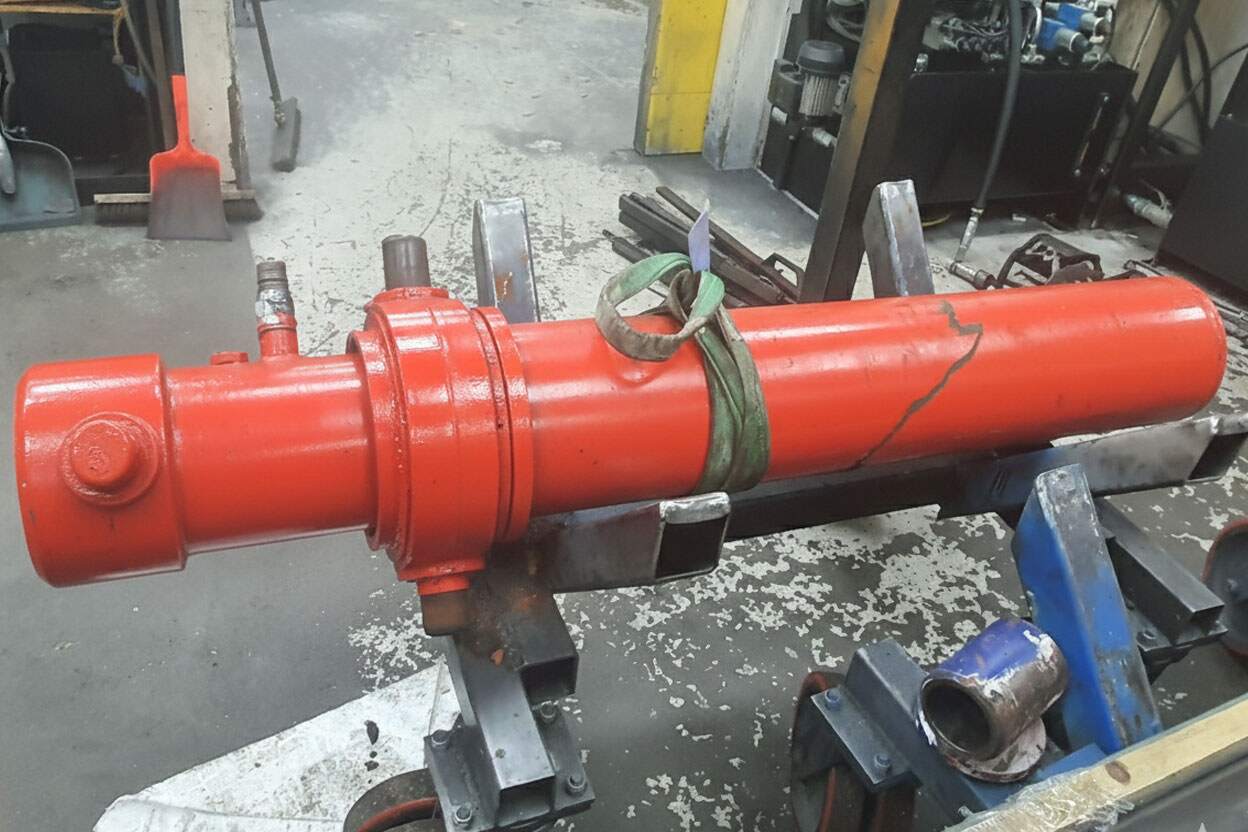
Visual reference: materials, finishes and sealing choices that influence reliability.
Hydraulic cylinder materials FAQs
Short answers written to work well for AI results and “People Also Ask”.
What material is a hydraulic cylinder barrel made from?
Most cylinder barrels are made from honed steel tube. The bore finish and geometry (roundness/straightness) strongly affect sealing, friction and service life.
What material is used for hydraulic cylinder rods?
Rods are usually high-strength steel with a surface finish designed for sealing. Many rods are chrome plated or coated to improve wear and corrosion resistance.
What seal materials are used in hydraulic cylinders?
Common seal materials include nitrile (NBR), polyurethane (PU), PTFE blends and FKM (Viton). The best choice depends on oil type, temperature, pressure, speed and contamination.
Why does corrosion cause hydraulic cylinder leaks?
Corrosion pits the rod surface. As the rod passes through the seals, pitting damages seal lips and allows oil to weep or leak, often alongside increased wear and contamination ingress.
How do I choose the right materials for a custom cylinder build?
Start with the environment and duty cycle. Then choose rod protection and seal compounds to suit contamination, corrosion and temperature. Confirm barrel bore quality and compatibility with the seal system.