
Hydraulic Cylinder Seals Explained (Types, Functions & Common Failures)
A practical guide to how hydraulic cylinder seals work and why the right seal system matters.
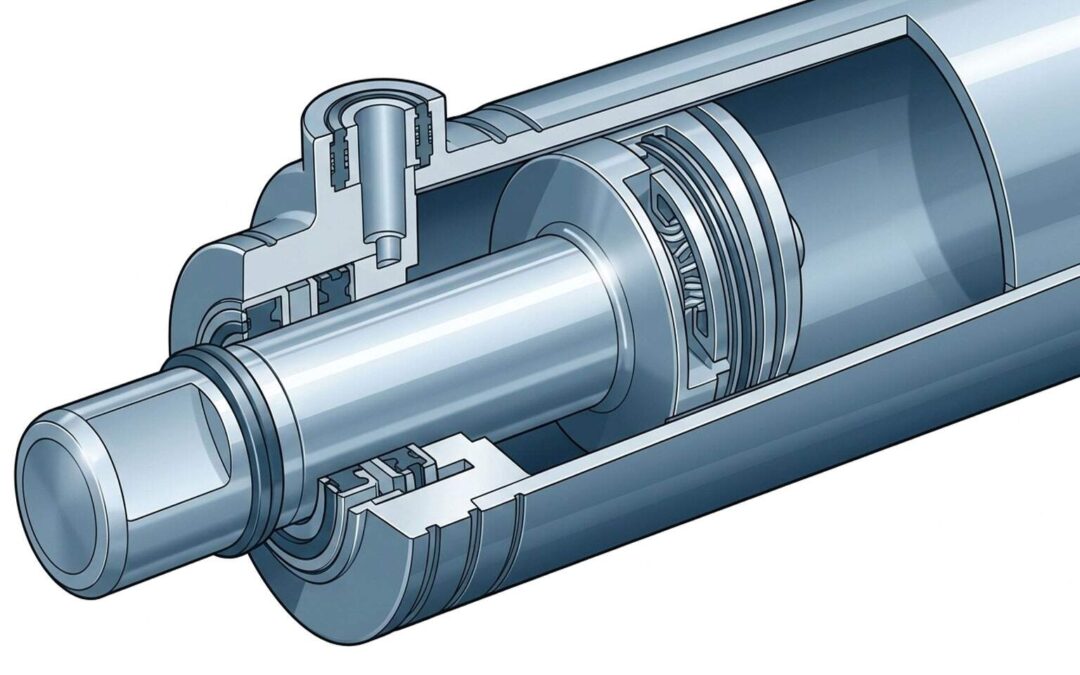
Hydraulic cylinder seals are responsible for containing hydraulic pressure, preventing leakage and ensuring smooth movement of the piston and rod.
When the seal system is wrong — or when the rod finish, bore geometry or contamination levels are poor — the result is usually the same: leaks, drift, scoring or repeated seal failure.
This guide explains the role of cylinder seals, the different types used in modern hydraulic systems, and the conditions that shorten seal life.
Hydraulic Online supports the manufacturing and engineering expertise of Completely Hydraulic.
If you require assistance with cylinder repair or specification, visit the
contact page →
What Hydraulic Cylinder Seals Actually Do
A hydraulic cylinder relies on seals to control fluid movement and maintain pressure inside the cylinder.
Without an effective seal system, hydraulic oil would escape past the piston or rod, causing immediate performance loss.
The Three Main Jobs of Cylinder Seals
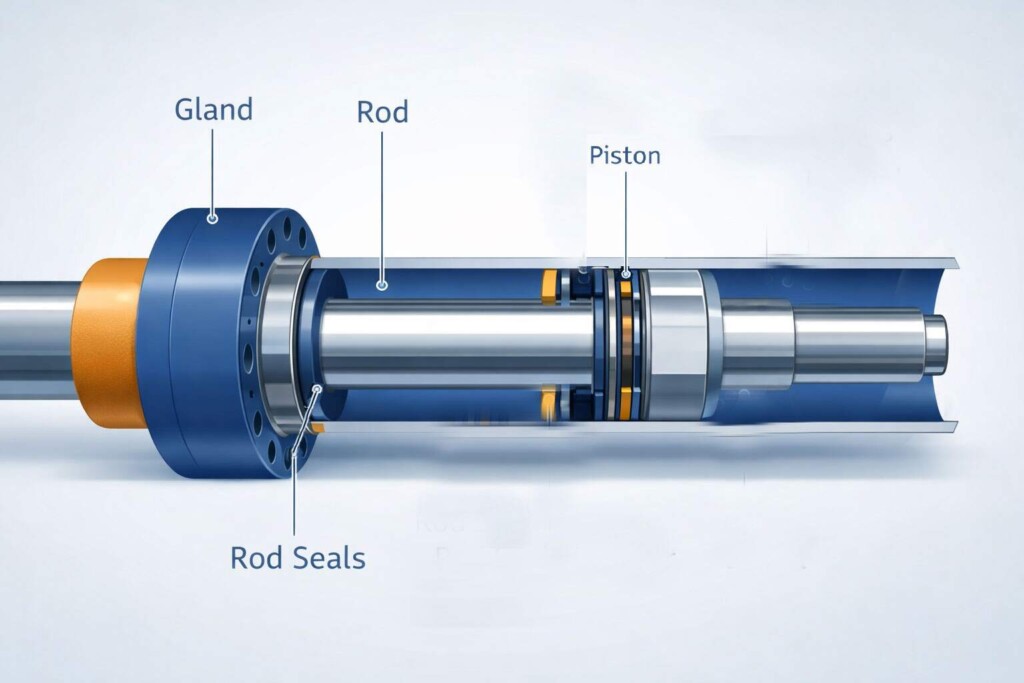
- Contain pressure: piston seals prevent hydraulic fluid bypass.
- Prevent external leaks: rod seals stop oil escaping from the gland.
- Keep contamination out: wiper seals prevent dirt and debris entering the cylinder.
When these functions fail, symptoms often appear as
external oil leaks, cylinder drift, slow operation or scoring.
Common Types of Hydraulic Cylinder Seals
Most hydraulic cylinders rely on a combination of seal types working together.
Piston Seals
Located on the piston itself, these seals prevent hydraulic fluid from bypassing the piston inside the cylinder bore.
Rod Seals
Rod seals prevent hydraulic oil escaping from the cylinder while the rod moves in and out.
Wiper Seals
Mounted on the outer end of the cylinder gland, wipers remove contamination from the rod during operation.
Get Priority Hydraulic Support & Trade Pricing
Jump the queue. Reduce downtime. Pay less for parts, labour and callouts.
✔ Priority response
✔ Lower rates day & night
✔ Trade discounts on parts
✔ 30-day credit terms (approved accounts)
Apply for a Completely Hydraulic Trade Account
Get Priority Hydraulic Support & Trade Pricing
Jump the queue. Reduce downtime. Pay less for parts, labour and callouts.
✔ Priority response
✔ Lower rates day & night
✔ Trade discounts on parts
✔ 30-day credit terms (approved accounts)
Why Hydraulic Cylinder Seals Fail
Seal failures are often blamed on the seal itself — but the real cause is usually somewhere else in the system.
Common Causes of Seal Failure
- Poor rod surface finish damaging seals
- Contamination entering the cylinder
- Misalignment or side-loading
- Incorrect seal material for temperature or pressure
- Bore scoring or wear
For deeper diagnosis see:
Why Hydraulic Cylinders Fail →
Common Seal Materials Used in Hydraulic Cylinders
Different materials are chosen depending on pressure, temperature and contamination levels.
Polyurethane (PU)
Commonly used for rod and piston seals due to excellent wear resistance.
PTFE
Low friction material used in high-speed or high-temperature environments.
Nitrile Rubber (NBR)
Common in many hydraulic systems due to good oil resistance and cost effectiveness.
Not Sure Why Your Cylinder Seals Keep Failing?
Seal failures often indicate deeper issues such as contamination, rod damage or misalignment.
If you describe the application and symptoms, we can help identify the likely cause.
Want to Understand Hydraulic Cylinders Better?
Start with the full manufacturing guide and explore the materials, machining and failure pages in the hub.