
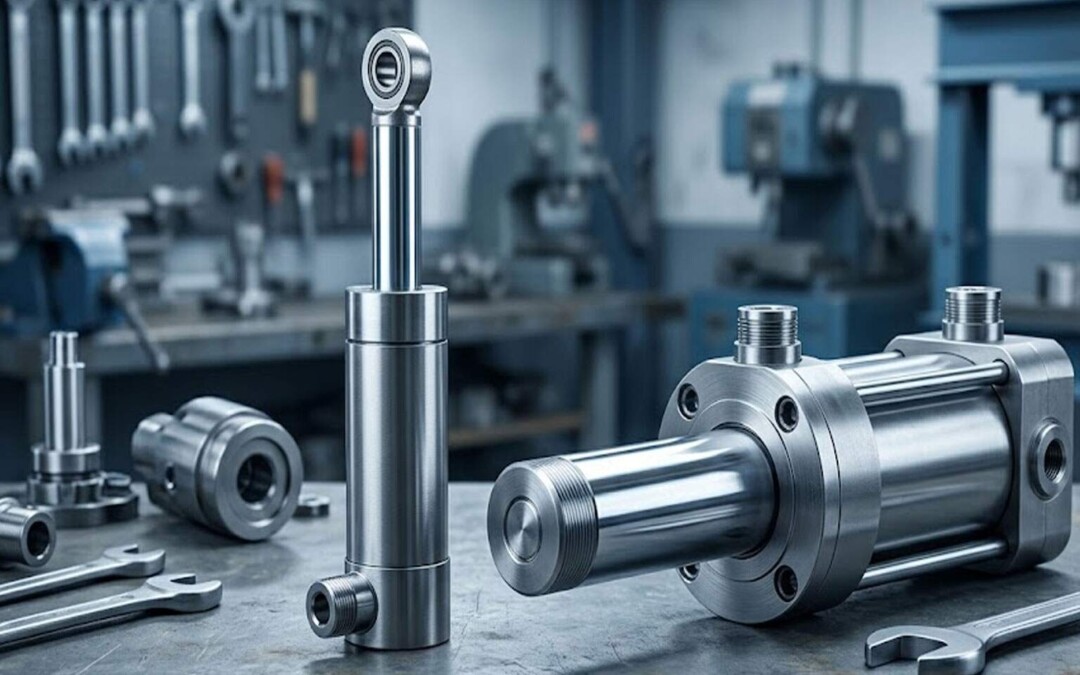
Hydraulic Cylinder Types Explained (Single Acting vs Double Acting)
A practical guide to the main hydraulic cylinder types, how they operate and where each one is used.
Not all hydraulic cylinders work the same way. Understanding the difference between single acting and double acting cylinders is essential when specifying a system, diagnosing a fault or selecting the right cylinder for the job.
While both designs convert hydraulic pressure into linear force, they do so in different ways. That affects control, porting, sealing requirements, installation and application suitability.
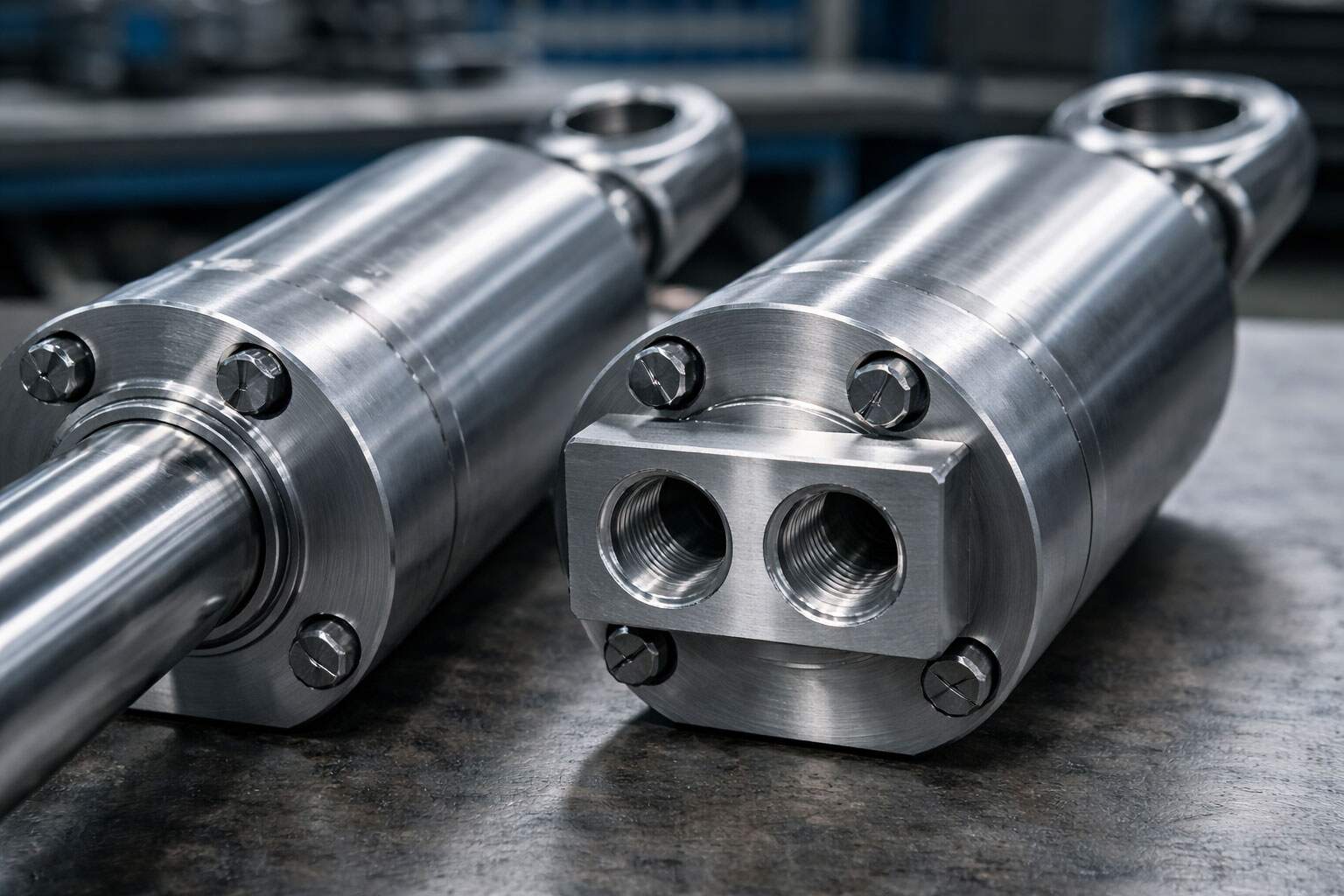
What Are Hydraulic Cylinder Types?
Hydraulic cylinders are commonly categorised by how hydraulic pressure is used to move the piston and rod assembly.
The two main types are single acting cylinders and double acting cylinders. In simple terms, a single acting cylinder uses hydraulic pressure in one direction only, while a double acting cylinder uses hydraulic pressure for both extension and retraction.
Quick Summary
- Single acting cylinder: pressure applied one way, return by gravity, spring or external load
- Double acting cylinder: pressure applied both ways for controlled extension and retraction
Main Hydraulic Cylinder Types
Single Acting Cylinder
Hydraulic pressure moves the piston in one direction only. The return stroke is produced by gravity, a spring or the weight of the load.
This design is simpler, usually has one working port and is often chosen where powered movement is only needed in one direction.
Double Acting Cylinder
Hydraulic pressure is applied to both sides of the piston, allowing controlled powered movement in both directions.
This design normally has two ports and is used where the machine needs controlled extension and controlled retraction under load.
Key Differences Between Single Acting and Double Acting Cylinders
- Single acting cylinders are simpler in design and often easier to service
- Double acting cylinders provide more control because movement is hydraulically powered in both directions
- Single acting cylinders typically have one hydraulic port
- Double acting cylinders typically have two hydraulic ports
- Double acting cylinders usually require a more complex sealing arrangement
- The correct choice depends on load direction, control requirements and available installation space
Where Each Type is Used
The application usually makes the selection clearer.
- Single acting cylinders: jacks, lifting equipment, tipping mechanisms, simple pressing operations
- Double acting cylinders: construction machinery, manufacturing equipment, agricultural machinery, industrial automation and general mobile hydraulics
Why Cylinder Type Affects Performance
Choosing the wrong cylinder type can create control issues, inefficient operation or unnecessary design complexity.
For example, if a machine needs precise powered retraction, a single acting cylinder may not be suitable. If the application only needs one powered stroke, a double acting cylinder may add unnecessary complexity.
This is why cylinder type should be considered alongside mounting type, assembly design and likely failure risks covered in Hydraulic Cylinder Failure Modes.
Frequently Asked Questions
What is the difference between a single acting and double acting hydraulic cylinder?
A single acting cylinder uses hydraulic pressure in one direction only, while a double acting cylinder uses hydraulic pressure in both directions.
How many ports does a single acting cylinder have?
A single acting cylinder usually has one hydraulic port because pressure is only applied to one side of the piston.
Why do double acting cylinders have two ports?
Double acting cylinders have two ports so hydraulic fluid can be directed to either side of the piston for powered extension and powered retraction.
Where are single acting cylinders commonly used?
Single acting cylinders are commonly used in jacks, lifts and tipping applications where the return movement can be produced by gravity or load.
Which is better, single acting or double acting?
Neither is better in every situation. The right choice depends on how much control is needed, how the load behaves and whether powered movement is required in one direction or both.
Need Help Choosing the Right Cylinder Type?
Choosing the correct hydraulic cylinder type is important for performance, efficiency and service life.