
A practical guide to the most common hydraulic cylinder failure modes, what causes them and what they mean in service.
Hydraulic cylinder failures rarely happen without warning. In most cases, visible leakage, scoring, poor movement or loss of performance are signs of a deeper underlying problem such as contamination, misalignment, wear or poor operating conditions.
Understanding failure modes helps engineers and operators move beyond surface symptoms and towards the real cause. For a broader overview, see why hydraulic cylinders fail or explore our guide to rebuild vs replacement.
What Is a Hydraulic Cylinder Failure Mode?
A failure mode is the specific pattern in which a component fails or begins to fail. In hydraulic cylinders, this might appear as rod scoring, seal damage, barrel wear, bending, corrosion or internal leakage.
Each failure mode points to a different combination of stress, contamination, installation quality, maintenance history and operating conditions. Recognising the pattern is one of the fastest ways to move from a symptom to a proper diagnosis.
Quick Answer
A hydraulic cylinder failure mode is the identifiable way a cylinder component breaks down, such as rod scoring, seal failure, barrel wear or corrosion, each of which points to a specific cause or combination of causes.
Common Hydraulic Cylinder Failure Modes
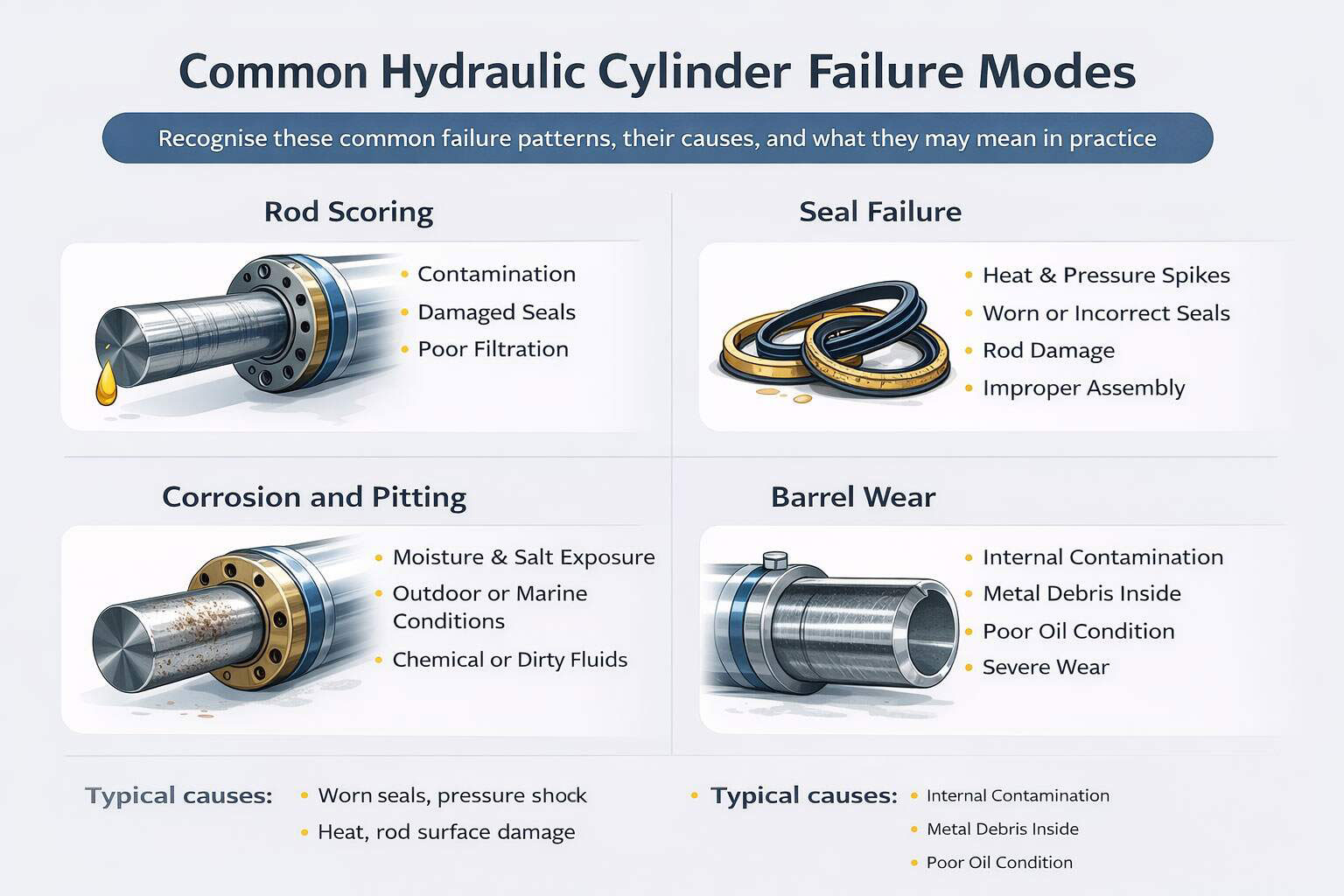
Rod Scoring
Rod scoring is one of the most common and most visible failure modes. Fine scratches or deeper marks on the rod surface can damage seals quickly and allow contamination into the cylinder.
Typical causes: contamination, damaged wipers, debris, poor maintenance.
Seal Failure
Seal failure often appears as external leakage or loss of holding pressure. It may be caused by age, heat, pressure spikes, incorrect seal materials or rod damage.
Typical causes: worn seals, pressure shock, heat, rod surface damage.
Barrel Wear or Scoring
Internal barrel damage affects sealing efficiency and performance. Once the bore is scored or worn, internal leakage and inconsistent movement become more likely.
Typical causes: contaminated oil, internal debris, poor filtration, severe wear.
Bent Rods
A bent rod creates uneven loading through the cylinder and can damage seals, glands and bearings. It often develops through side loading or poor alignment.
Typical causes: misalignment, overload, poor mounting, side loading.
Pitting and Corrosion
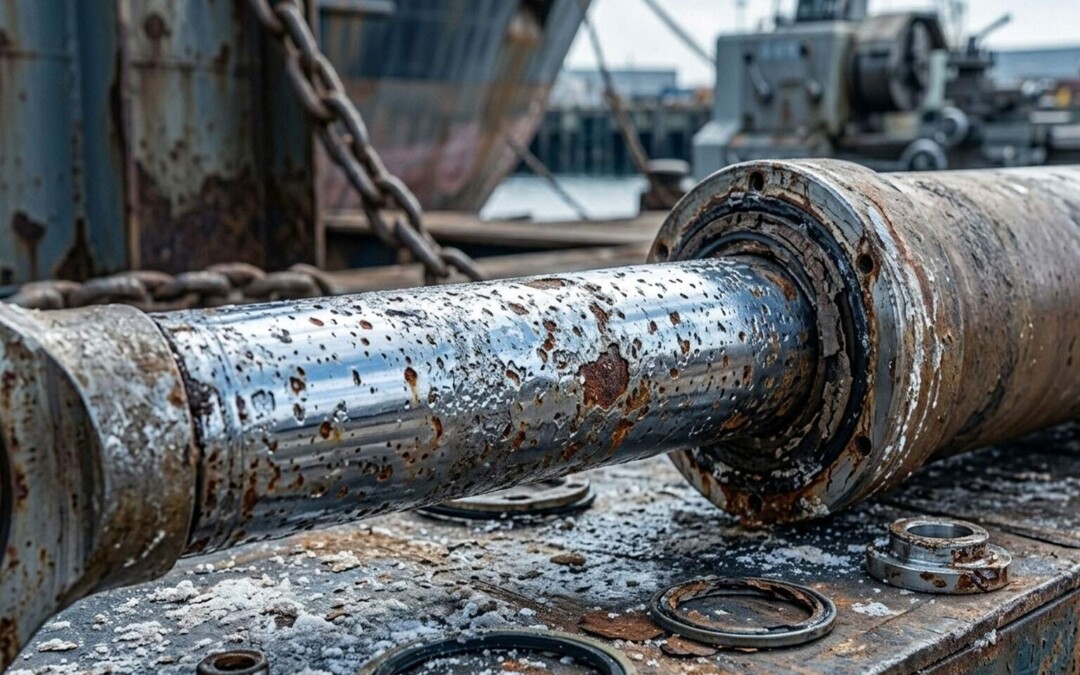
Corrosion or pitting on the rod surface creates sharp imperfections that damage seals during movement. This is especially common in outdoor, marine or harsh environments.
Typical causes: moisture, salt exposure, chemical conditions, poor storage.
Mounting or Alignment Wear
When a cylinder is not installed or supported correctly, loads do not travel through it as intended. This creates secondary wear across multiple parts.
Typical causes: worn pins, poor installation, incorrect mounting geometry.
What These Failure Modes Usually Look Like in Practice
In service, failure modes rarely arrive as neat labels. Instead, they show up as practical warning signs that engineers and operators notice first.
Typical Warning Signs
- Oil leakage around the rod seal area
- Visible scratches, pitting or corrosion on the rod
- Jerky, uneven or hesitant movement
- Loss of holding pressure or internal bypass symptoms
- Recurring seal damage after recent repair
- Excessive noise or side-loading behaviour during operation
Root Cause vs Symptom
One of the biggest mistakes in hydraulic fault finding is confusing the visible symptom with the actual cause. A failed seal, for example, is often treated as the problem itself, when in reality it may only be the result of rod scoring, contamination, misalignment or barrel wear.
This is why repeated failure happens so often. If the root cause is not identified, replacing the damaged part may only restore the cylinder temporarily.
Important
A leaking cylinder is not automatically a seal problem. A scored rod is not always just a surface issue. Good diagnosis starts by asking what caused the visible damage, not just how to replace it.
Why Failure Modes Matter in Repair Decisions
The type of failure mode often determines whether a cylinder should be repaired, rebuilt or replaced.
A cylinder with minor seal wear and a sound rod may be straightforward to repair. A cylinder with severe rod scoring, bent components or extensive internal barrel damage may require a much more involved rebuild or complete replacement.
This is why recognising failure patterns early can save time and reduce cost. The earlier the issue is identified, the more options remain available.
For more on that decision, read Hydraulic Cylinder Rebuild vs Replacement.
Get Priority Hydraulic Support & Trade Pricing
Jump the queue. Reduce downtime. Pay less for parts, labour and callouts.
✔ Priority response
✔ Lower rates day & night
✔ Trade discounts on parts
✔ 30-day credit terms (approved accounts)
How to Reduce Hydraulic Cylinder Failure Modes
Most failure modes can be reduced, delayed or prevented through good maintenance, cleaner operating conditions and correct installation.
- Keep hydraulic fluid clean and maintain effective filtration
- Inspect rods regularly for scratches, pitting and contamination
- Check seal areas and leakage early
- Ensure mounting points and geometry are correct
- Adapt inspection frequency to the application environment
- Investigate recurring damage rather than repeating the same repair
For a more preventative approach, see the Hydraulic Cylinder Maintenance Guide.
Why This Matters Across Industry
Hydraulic cylinder failure modes affect more than workshop repair time. Across construction, transport, manufacturing, agriculture, aviation ground support, marine equipment and defence-related applications, cylinder reliability has a direct impact on uptime, safety and maintenance cost.
Understanding how these failures begin allows maintenance teams to make earlier, better decisions and reduce the risk of repeated disruption.
Frequently Asked Questions
What is the most common hydraulic cylinder failure mode?
Rod scoring and seal failure are among the most common visible failure modes because they often appear early and quickly affect performance.
Can a failed seal be caused by another problem?
Yes. Seal failure is often a symptom of other issues such as rod damage, contamination, misalignment or pressure-related stress.
Does rod scoring always mean replacement?
Not always. Light scoring may be manageable depending on severity, but deeper damage often leads to ongoing seal wear and more serious repair decisions.
Why do hydraulic cylinders fail repeatedly?
Repeated failures usually happen when the visible symptom is repaired but the root cause is missed, allowing the same damage pattern to return.
Can good maintenance reduce failure modes?
Yes. Regular inspection, cleaner fluid, correct alignment and early action all reduce the likelihood of major cylinder failure.
Want to Understand Hydraulic Cylinder Reliability in More Depth?
Failure modes are only one part of the full picture. Explore design, maintenance, repair and lifecycle guidance across the Hydraulic Online knowledge hub.