
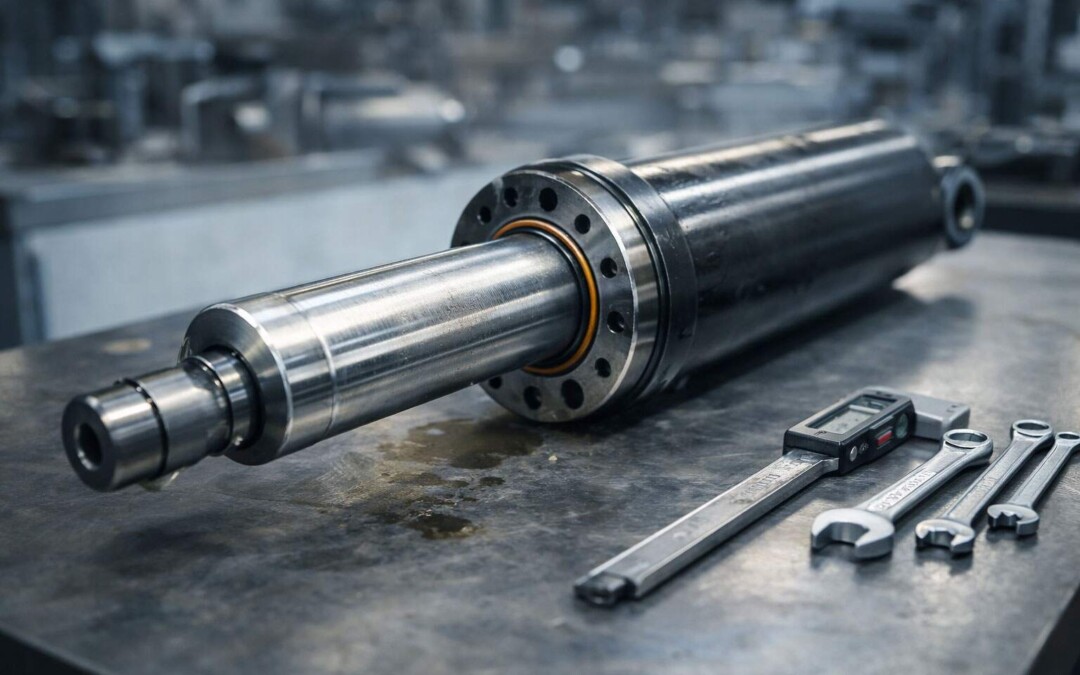
Hydraulic cylinder troubleshooting involves identifying visible symptoms such as leaks, scoring, pressure loss or slow movement, then tracing these back to root causes including contamination, seal failure, misalignment or wear.
Hydraulic Cylinder Troubleshooting Guide
A practical guide to diagnosing hydraulic cylinder problems, identifying root causes and deciding what to do next.
Hydraulic cylinder problems rarely begin as complete failures.
Most issues start with visible warning signs such as leakage, scoring, slow movement, pressure loss or poor performance under load. If these symptoms are understood early, engineers and operators can often prevent more serious failure and avoid unnecessary rebuild or replacement work.
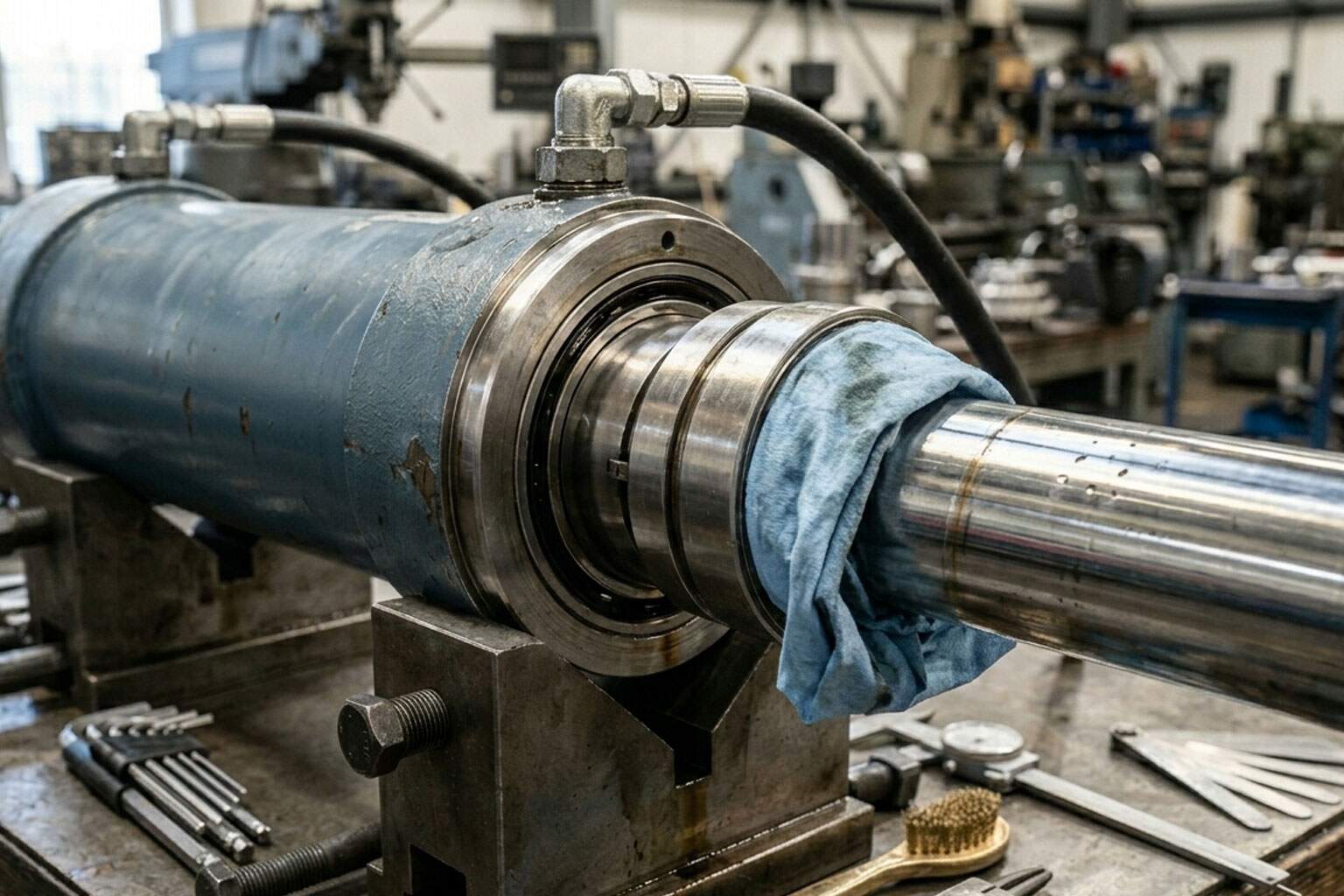
How to Troubleshoot a Hydraulic Cylinder Step by Step
Hydraulic cylinder troubleshooting works best when it follows a clear sequence. Jumping straight to repair without identifying the actual cause can lead to repeated failures, wasted parts and more downtime.
Core Process
2. Inspect the rod, seals and surrounding area
3. Check for contamination, wear and alignment issues
4. Match the problem to a known failure mode
5. Decide whether repair, rebuild or replacement is the best option
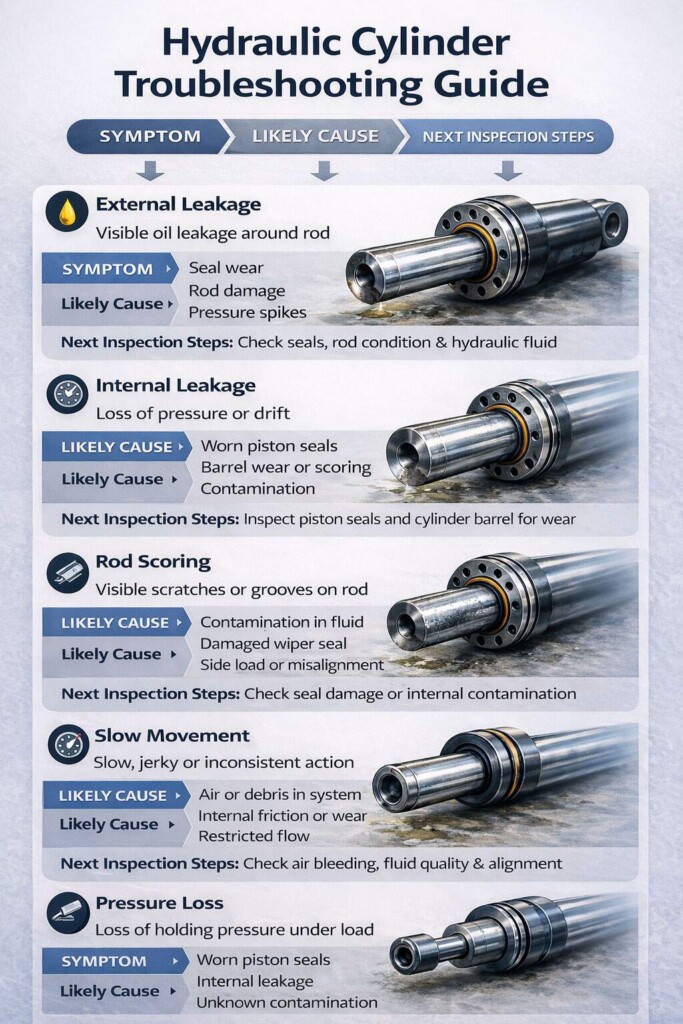
Common Hydraulic Cylinder Problems and Symptoms
Most hydraulic cylinder faults appear in a relatively small number of ways. The key is recognising what the symptom usually points to.
Internal leakage – often appears as pressure loss or drift under load
Rod scoring – usually linked to contamination or damaged wipers
Slow movement – may indicate internal wear, poor flow or contamination
Jerky movement – often suggests air, friction, misalignment or damaged surfaces
Repeat seal failure – usually means the visible repair has not addressed the real cause
Typical Troubleshooting Areas
External Leakage
If oil is visible around the rod or gland area, the immediate suspicion is usually seal wear. However, the seal itself may only be the victim of rod damage, contamination or incorrect pressure conditions.
Internal Leakage
A cylinder that drifts, loses force or cannot hold load may be suffering from internal bypass. This often points to worn seals, bore wear or internal scoring.
Rod Damage
Scoring, pitting and corrosion on the rod surface are strong signs that seal life will be reduced and contamination control may already be compromised.
Slow or Jerky Movement
Inconsistent movement often indicates contamination, internal friction, air in the system or side loading caused by poor alignment.
Loss of Holding Pressure
If the cylinder cannot maintain load, pressure may be escaping internally. This usually requires closer inspection of seals, piston condition and bore wear.
Repeat Failure After Repair
If the same cylinder fails again soon after repair, the original issue was probably not the true root cause. This is where proper fault-finding becomes essential.
External Leakage Troubleshooting
Oil leakage is one of the easiest issues to spot, but it is not always the easiest to diagnose correctly.
A leaking rod seal may suggest the seal has failed, but the real cause may be contamination, rod scoring, pressure spikes or excessive side load.
Check For
Worn or damaged seals
Contaminated hydraulic fluid
Evidence of pressure shock
Signs of misalignment or side loading
Internal Leakage and Pressure Loss
Internal leakage is harder to spot because the oil may not be visible outside the cylinder. Instead, the system shows performance symptoms such as drift, poor holding force or reduced efficiency.
In many cases, this points to worn piston seals, internal scoring or excessive bore wear. These issues often require strip-down and closer inspection before a reliable decision can be made.
For a broader understanding of these patterns, see Hydraulic Cylinder Failure Modes Explained.
Root Cause vs Symptom
One of the biggest troubleshooting mistakes is treating the visible symptom as the actual problem.
A failed seal may not be a seal problem. A scored rod may not be only a surface issue. A slow cylinder may not be caused by the cylinder alone.
Troubleshooting works best when the visible symptom is treated as a clue, not the final answer.
Important
A quick fix that ignores the root cause often leads to the same failure returning. Good troubleshooting asks what caused the damage, not just which part needs replacing.
When Troubleshooting Leads to Repair Decisions
The point of troubleshooting is not just to identify a fault. It is to decide what action makes sense.
A cylinder with minor seal wear and a sound rod may be straightforward to repair. A cylinder with severe rod scoring, bent components or extensive internal barrel damage may require a more involved rebuild or complete replacement.
For more on that decision, read Hydraulic Cylinder Rebuild vs Replacement.
Get Priority Hydraulic Support & Trade Pricing
Jump the queue. Reduce downtime. Pay less for parts, labour and callouts.
✔ Priority response
✔ Lower rates day & night
✔ Trade discounts on parts
✔ 30-day credit terms (approved accounts)
How to Reduce Hydraulic Cylinder Problems
Most hydraulic cylinder faults can be reduced, delayed or prevented through better maintenance, cleaner fluid and correct installation practice.
Inspect rods regularly for scratches, pitting and contamination
Check seals and leakage early rather than waiting for major failure
Ensure mounting points and geometry are correct
Adapt inspection frequency to the application environment
Investigate recurring faults rather than repeating the same repair
For a more preventative approach, see the Hydraulic Cylinder Maintenance Guide.
Why This Matters Across Industry
Hydraulic cylinder troubleshooting matters far beyond the workshop. Across construction, transport, manufacturing, agriculture, aviation ground support, marine equipment and defence-related applications, cylinder reliability directly affects uptime, safety and maintenance cost.
Understanding symptoms early and diagnosing them properly gives engineers and maintenance teams the chance to act before problems become far more disruptive and expensive.
Not Sure Which Hydraulic Oil You Need?
Some machines require specialist or OEM-specific hydraulic oil. Using the wrong oil can cause serious damage.
Check Your Oil NowFrequently Asked Questions
How do you troubleshoot a hydraulic cylinder?
Hydraulic cylinder troubleshooting involves identifying visible symptoms such as leaks, scoring, slow movement or pressure loss, then tracing them back to likely causes such as contamination, seal wear, misalignment or internal damage.
What causes hydraulic cylinders to lose pressure?
Pressure loss is often caused by internal leakage, worn seals, internal scoring, barrel wear or piston-related sealing problems.
Why does a hydraulic cylinder move slowly?
Slow movement can be caused by contamination, internal wear, poor flow, air in the system, friction or alignment-related loading issues.
Is external leakage always a seal problem?
No. A leaking seal may be the visible symptom, but the real cause could be rod scoring, contamination, pressure shock or misalignment.
When should a cylinder be rebuilt instead of repaired?
A rebuild is usually more appropriate when damage extends beyond a simple seal issue and involves rod wear, internal bore damage, bent components or repeated failure patterns.
Need Help Diagnosing a Hydraulic Cylinder Problem?
If you are dealing with leakage, scoring, pressure loss or repeat cylinder failure, the right diagnosis can save time, money and unnecessary downtime.