
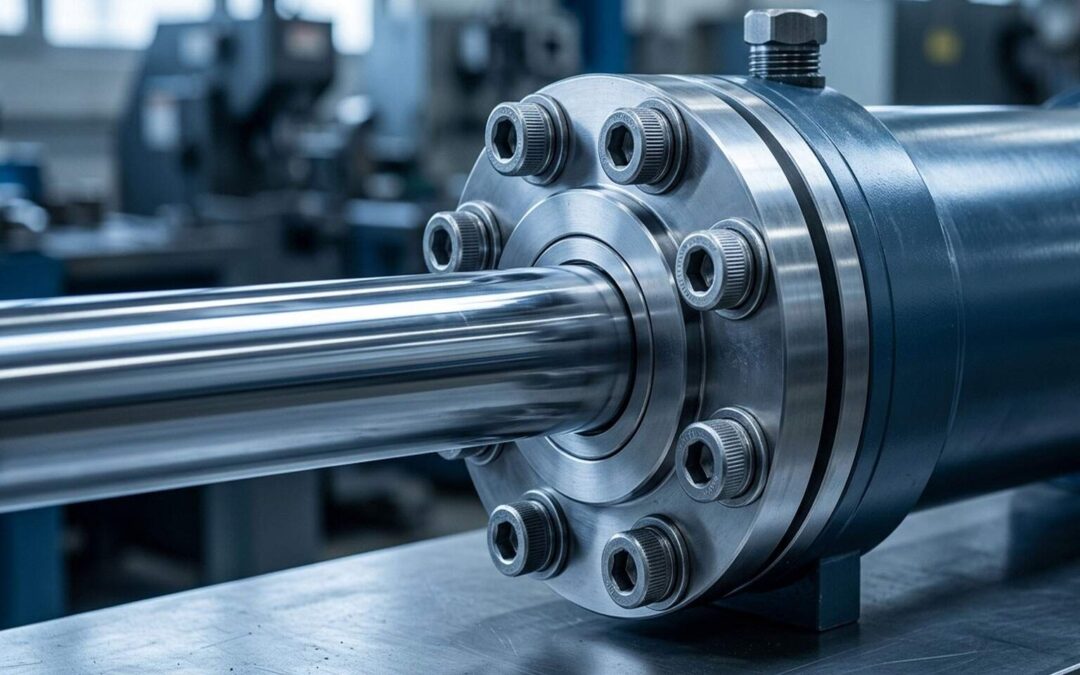
Understanding the role of cylinder glands, seal housing and rod guidance in hydraulic cylinders.
A practical guide to hydraulic cylinder glands, how they support the rod and why gland design affects seal life. Hydraulic cylinder glands sit at the front of the cylinder and guide the piston rod as it moves in and out of the barrel. The gland also houses the rod seal, wiper seal and guide components that keep hydraulic pressure contained and contamination out. When the gland is worn, misaligned or incorrectly machined, the result is often the same: seal failure, oil leakage or rod damage. This guide explains the role of the hydraulic gland, the components it contains and the common issues that affect gland performance.
Hydraulic Online supports the engineering expertise of Completely Hydraulic. If you require help diagnosing cylinder issues or specifying replacement parts, visit the contact page →
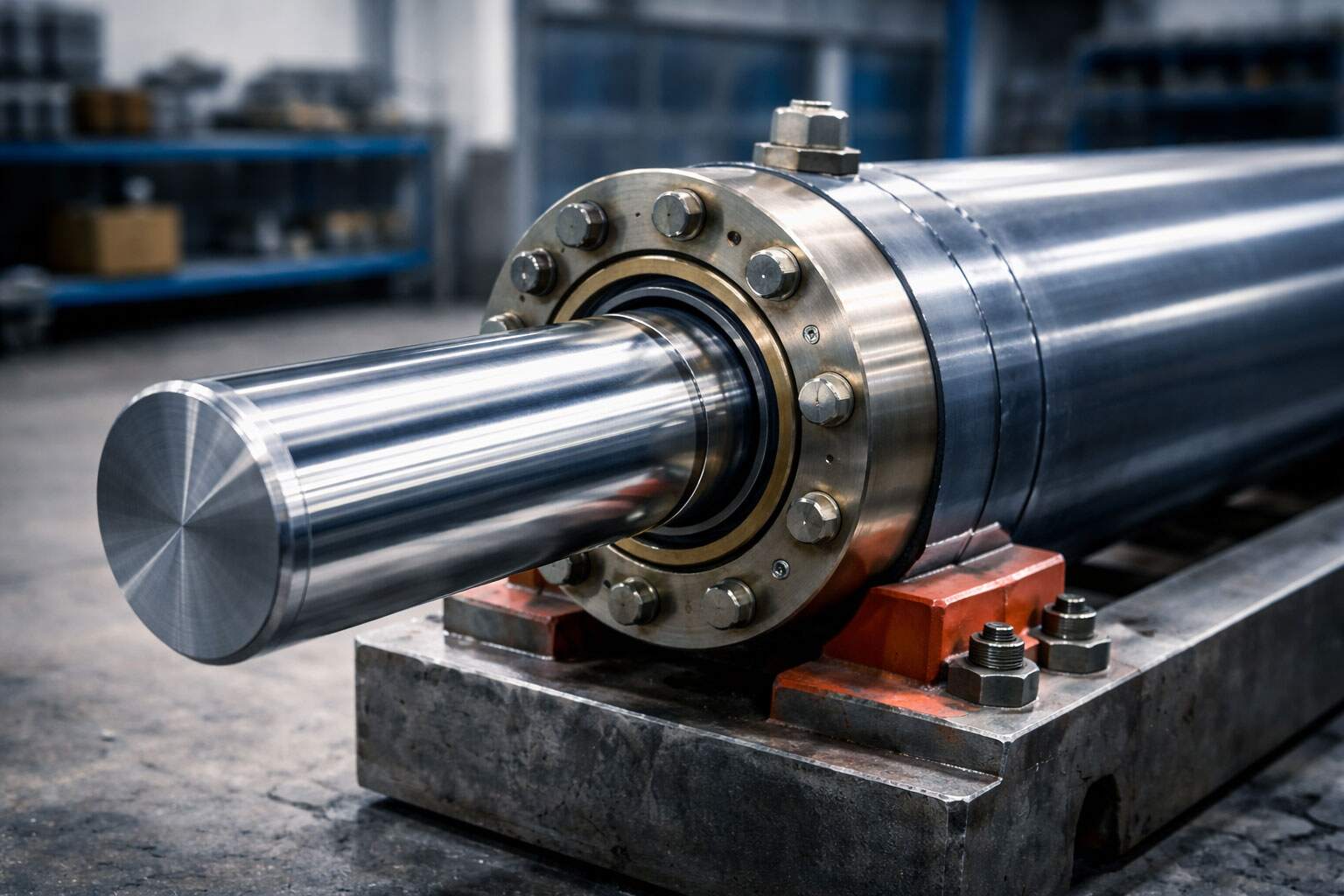
What a Hydraulic Cylinder Gland Actually Does
A hydraulic cylinder gland performs several important functions inside a hydraulic cylinder assembly. The gland is fitted into the front of the cylinder barrel and the piston rod passes through its centre.
Key Functions of a Cylinder Gland
- Guide the piston rod as it moves in and out of the cylinder
- House the rod sealing system
- Prevent external oil leakage
- Keep contamination out of the cylinder
Because the gland controls how the rod moves through the seal system, its machining tolerances and surface condition are extremely important. Poor gland design can quickly lead to seal wear or rod scoring.
Components Inside a Hydraulic Cylinder Gland
A typical gland contains several components working together to control fluid and protect the cylinder.
Rod Seal
The primary seal preventing hydraulic oil escaping from the cylinder as the rod moves.
Wiper Seal
Removes dirt and debris from the rod before it enters the cylinder.
Wear Ring / Guide
Supports the rod and helps maintain correct alignment inside the gland.
Common Types of Hydraulic Cylinder Glands
Hydraulic cylinder glands can be secured in several different ways depending on cylinder design.
Typical Gland Designs
- Threaded glands screwed directly into the cylinder barrel
- Bolt-on glands secured using a flange and bolts
- Retaining ring glands held in place using internal retaining rings
The design chosen depends on cylinder pressure rating, size and service requirements.
Common Hydraulic Cylinder Gland Problems
When glands become worn or damaged, the entire cylinder sealing system can be affected.
Seal Housing Wear
Over time the seal grooves inside the gland may wear, allowing seals to move or leak.
Rod Misalignment
If the gland does not guide the rod correctly, seals wear rapidly.
Contamination Damage
Dirt entering the gland area can damage seals and rod surfaces.
For deeper troubleshooting see: Why Hydraulic Cylinders Fail →
Experiencing Cylinder Leaks or Seal Failures?
Many cylinder problems originate from gland wear, rod damage or contamination. If you describe the symptoms and application, we can help identify the likely cause. Contact the Team
Want to Understand Hydraulic Cylinders Better?
Start with the full manufacturing guide and explore the materials, machining and failure pages in the hub.