
Hydraulic Cylinder Force & Pressure Explained (How Cylinders Create Linear Force)
A practical guide to how hydraulic pressure creates force inside a cylinder and why piston area matters.
Hydraulic cylinders create linear force by applying fluid pressure across the surface area of the piston.
This is one of the most important principles in hydraulic engineering. If you understand the relationship between pressure, piston area and rod area, you can better size cylinders, diagnose performance problems and avoid underpowered or inefficient system design.
How Hydraulic Pressure Creates Force
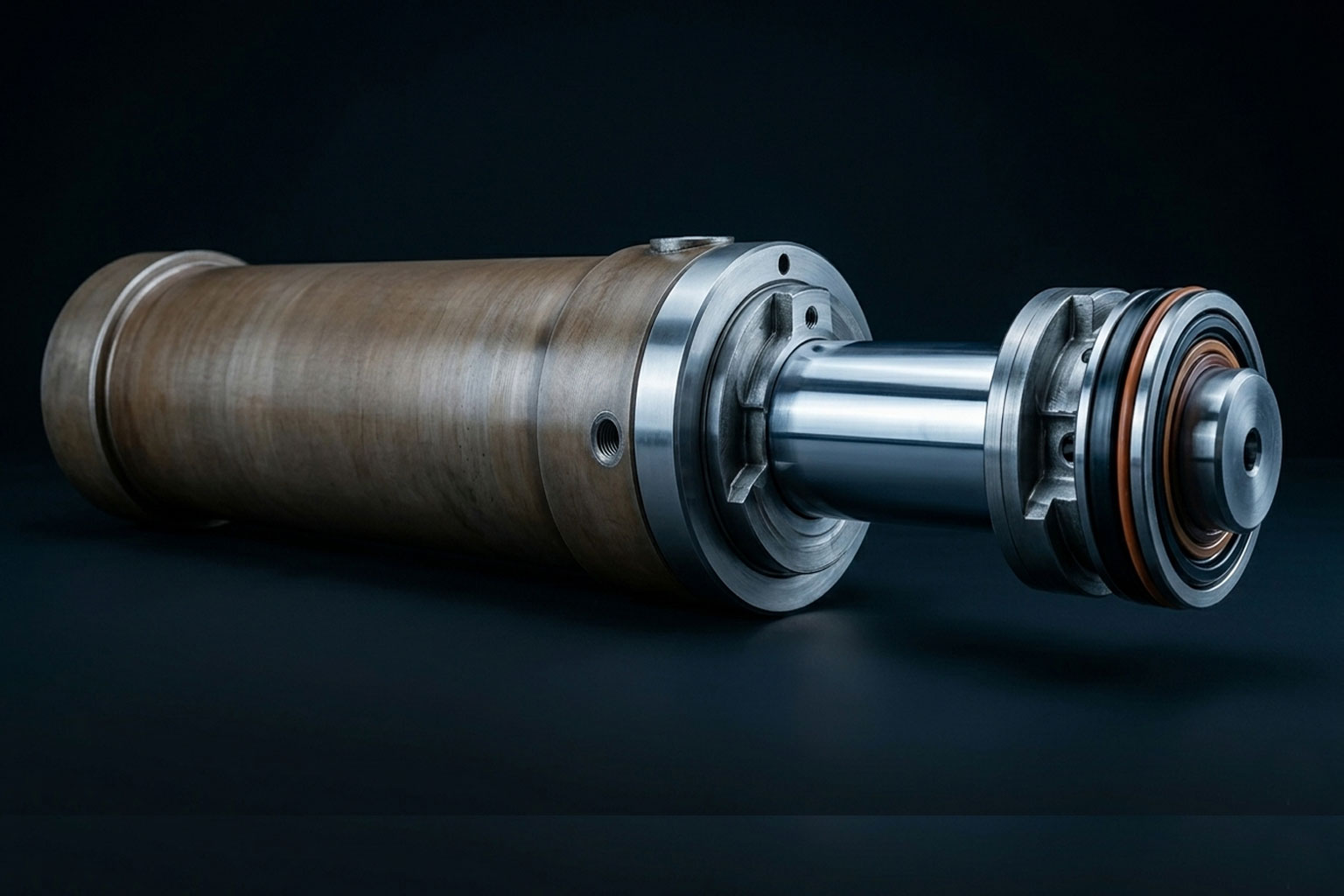
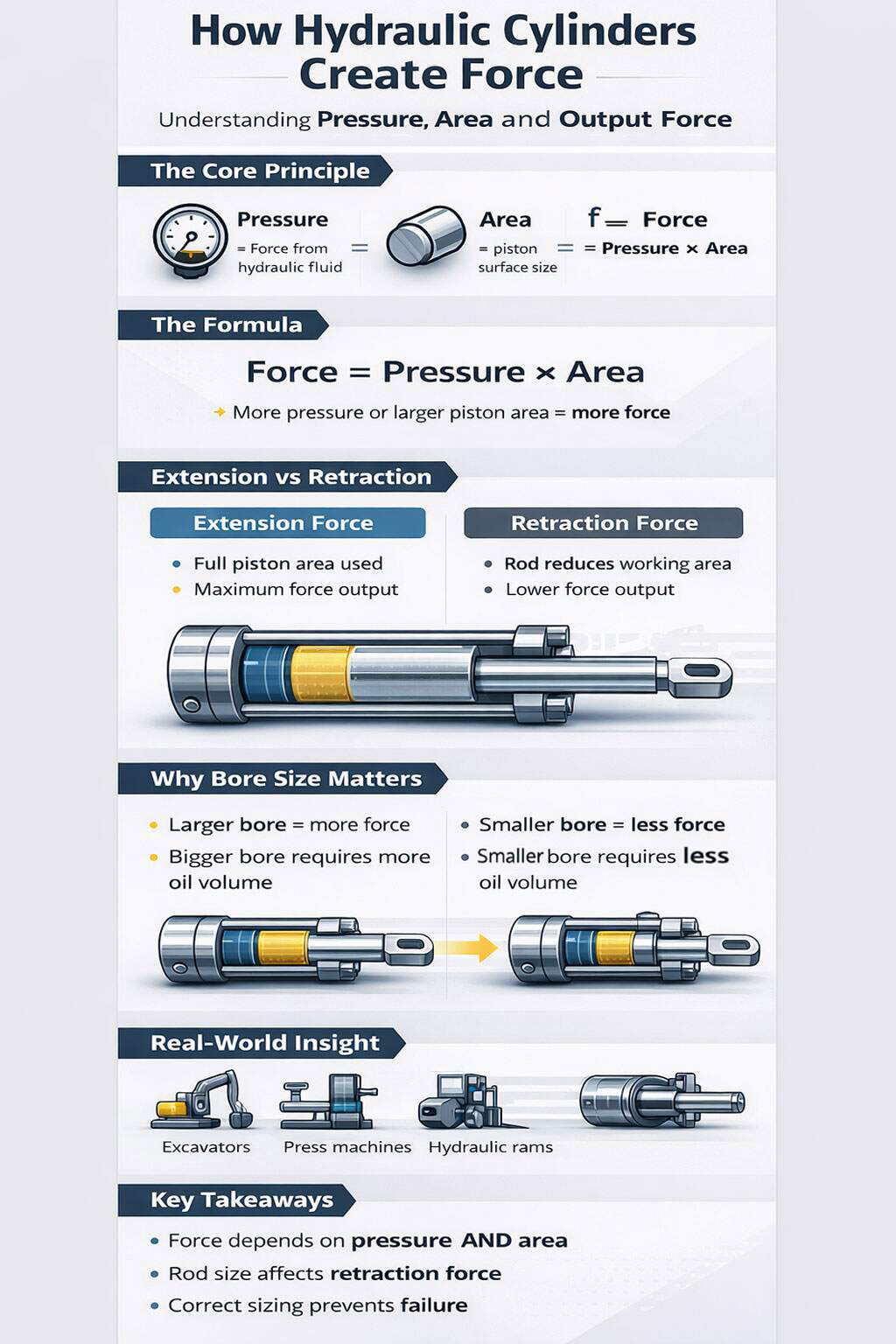
Hydraulic pressure is the force exerted by hydraulic fluid per unit area. Inside a cylinder, that pressure acts across the face of the piston. The larger the piston area, the more force the cylinder can generate at the same pressure.
This is why cylinder bore size is so important. A cylinder with a larger bore can produce more force, but it will also require more oil volume to move the piston through the same stroke length.
Core Principle
- Pressure = how hard the oil is pushing
- Area = how much piston surface the pressure acts on
- Force = the result of pressure acting across that area
The Basic Hydraulic Cylinder Force Formula
The standard relationship is:
In practical terms, if hydraulic pressure increases and piston area remains the same, cylinder force increases. If piston area increases and pressure remains the same, cylinder force also increases.
In metric systems, force is often expressed in newtons or kilonewtons. In workshop practice, engineers may also discuss tonnes of force depending on the application.
Extension Force vs Retraction Force
Extension Force
During extension, hydraulic pressure acts across the full piston face. This usually produces the highest available force from the cylinder.
Retraction Force
During retraction, the piston rod takes up some of the piston area. That means the effective working area is smaller, so retraction force is lower than extension force.
Why Rod Diameter Matters
In a double acting cylinder, the piston rod reduces the effective area on the rod side of the piston. This changes both retraction force and flow requirements.
A larger rod diameter gives better strength and stiffness, but it also reduces retraction force further because it removes more working area.
This is one reason why cylinder design is always a balance between force, speed, strength and available installation space.
To understand how the full cylinder is built around this principle, see Hydraulic Cylinder Assembly Explained and Hydraulic Cylinder Rods Explained.
Simple Real-World Example
If two cylinders are both running at the same pressure, the larger bore cylinder will produce more force because its piston area is greater.
That is why a compact cylinder may be suitable for light-duty clamping, while a much larger bore cylinder is needed for pressing, lifting or heavy industrial movement.
- Small bore = less force, lower oil volume
- Large bore = more force, higher oil volume
- Larger rod = more strength, but lower retraction force
Why Force and Pressure Matter in Cylinder Selection
If the cylinder is undersized, it may stall, move slowly under load or operate close to system limits. If it is oversized, the system may become unnecessarily bulky and demand more oil flow than needed.
Correct cylinder selection depends on more than force alone. Engineers must also consider stroke length, mounting arrangement, duty cycle, sealing design and likely failure risks.
Related reading:
Frequently Asked Questions
What creates force in a hydraulic cylinder?
Force is created when hydraulic pressure acts across the surface area of the piston inside the cylinder.
Why is extension force usually higher than retraction force?
Extension force is usually higher because pressure acts on the full piston face, while retraction force is reduced by the area taken up by the piston rod.
Does a larger bore cylinder create more force?
Yes. A larger bore increases piston area, which increases force at the same hydraulic pressure.
Does a larger rod reduce force?
A larger rod reduces retraction force because it reduces the effective area on the rod side of the piston.
Why is force calculation important in hydraulic design?
Force calculation helps engineers choose the correct bore size, avoid under powered systems and ensure the cylinder matches the application load.
Need Help Choosing the Right Hydraulic Cylinder?
If you need help with cylinder sizing, performance issues or application suitability, we can help you make the right choice.