
Hydraulic Cylinder Honing Explained (Bore Finish, Seal Life & Performance)
A practical guide to hydraulic cylinder honing, why bore finish matters and how honing affects seal life.
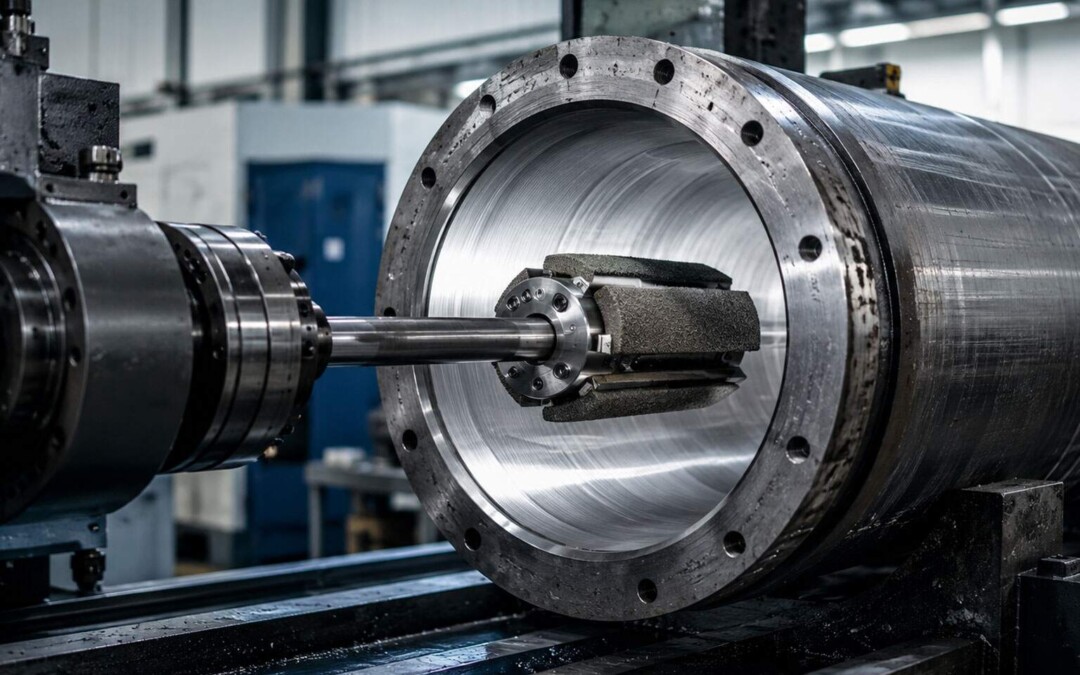
Hydraulic cylinder honing is the finishing process used to create the correct internal bore surface inside a cylinder barrel.
A properly honed bore helps piston seals bed in correctly, reduces friction, improves oil retention and supports reliable cylinder performance. If the bore finish is poor, the cylinder may suffer from internal leakage, drift, heat build-up or repeated seal failure.
What Is Hydraulic Cylinder Honing?
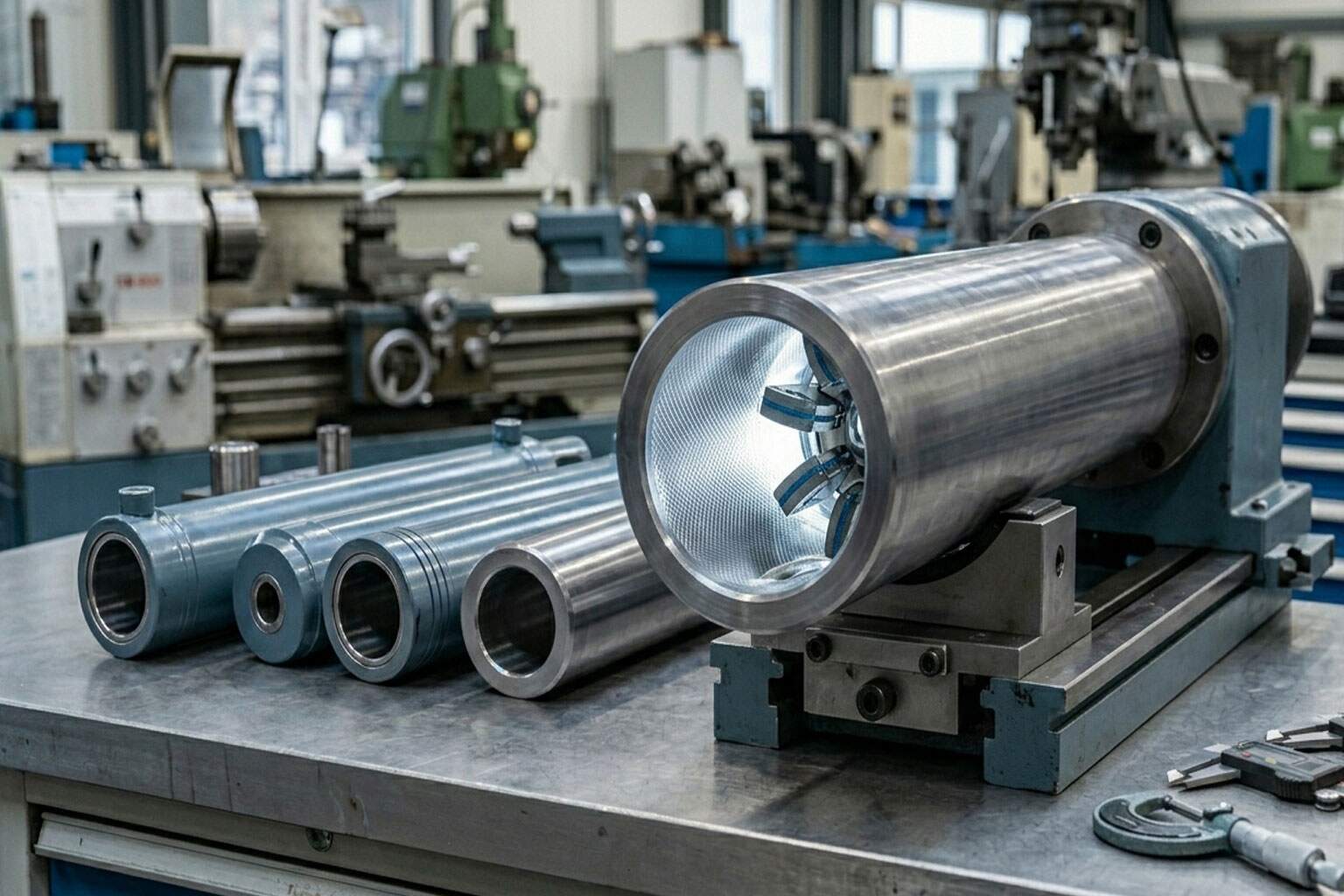
Honing is a precision finishing process used on the inside of the hydraulic cylinder barrel. It removes small imperfections and creates a controlled bore surface for the piston seals to run against.
The aim is not simply to make the bore shiny. The goal is to create the right surface texture, geometry and oil-retaining finish for reliable sealing.
Quick Answer
Hydraulic cylinder honing is the process of finishing the internal bore of a cylinder barrel so piston seals can move smoothly, retain lubrication and maintain pressure without excessive wear or bypass.
Why Honing Matters in Hydraulic Cylinders
The bore finish directly affects how well the piston seals perform inside the cylinder.
Seal Life
A controlled bore finish reduces seal wear and helps prevent early failure.
Oil Retention
The honed surface helps hold a thin oil film, supporting lubrication and smoother piston movement.
Pressure Control
Good honing supports piston seal contact, reducing internal bypass and cylinder drift.
What Is a Cross-Hatch Pattern?
A honed cylinder bore often has a fine cross-hatch pattern. This pattern is created by the honing stones as they move and rotate inside the barrel.
The cross-hatch helps retain oil and provides a controlled surface for the piston seals. A poor pattern may cause dry running, excessive friction or seal wear.
Engineering Tip
A cylinder bore should not simply be polished smooth. The correct honed finish supports lubrication, sealing and controlled movement.
Good Bore Finish vs Poor Bore Finish
The difference between a good and poor bore finish may not always be obvious visually, but it can have a major impact on cylinder reliability.
Correct Honed Finish
Supports oil film retention, reduces friction and helps seals maintain pressure.
Too Rough
Can act like an abrasive surface, wearing piston seals quickly and generating heat.
Too Smooth
May fail to retain oil properly, causing dry running and increased seal friction.
When Does a Cylinder Barrel Need Honing?
A hydraulic cylinder barrel may need honing during manufacture, refurbishment or repair. It is especially important when the bore surface has light scoring, glazing or uneven wear.
Common Reasons for Honing
- New cylinder manufacture: to create the correct bore finish before assembly.
- Resealing work: to restore surface condition before fitting new piston seals.
- Light bore scoring: to remove minor marks and improve sealing.
- Glazed bore surface: to restore oil retention and seal bedding.
- Repair inspection: to prepare the bore if it is still within usable limits.
Honing vs Boring: What Is the Difference?
Honing and boring are not the same process. Both involve the cylinder bore, but they are used for different purposes.
Boring
Boring removes more material and is used to correct size, alignment or significant internal damage.
Honing
Honing is a finishing process used to refine the bore surface and create the correct seal-running finish.
How Poor Honing Causes Cylinder Problems
If the bore finish is wrong, the piston seals cannot work properly. This can create several common performance issues.
Symptoms Linked to Poor Bore Finish
- Cylinder drift: oil bypasses the piston seal internally.
- Seal wear: the bore surface damages the sealing edge.
- Heat build-up: friction increases during operation.
- Stick-slip movement: the piston does not move smoothly.
- Repeat failures: new seals fail because the bore condition was not corrected.
For deeper fault diagnosis see:
Why Hydraulic Cylinders Fail →
Related Hydraulic Cylinder Guides
Not Sure If the Bore Finish Is Causing the Problem?
If your cylinder is drifting, damaging piston seals or running unevenly after repair, the bore finish may need inspection.
Want to Understand Hydraulic Cylinders Better?
Start with the full manufacturing guide and explore the barrels, seals, tolerances and failure pages in the hub.
Frequently Asked Questions
What is hydraulic cylinder honing?
Hydraulic cylinder honing is the process of finishing the internal bore of a cylinder barrel to create the correct surface for piston seals.
Why is bore finish important?
Bore finish affects seal life, oil retention, friction, pressure holding and internal leakage.
Can honing fix a scored cylinder barrel?
Honing may help with light scoring, but deep damage, distortion or heavy wear may require boring, sleeving or barrel replacement.
Is honing the same as polishing?
No. Honing creates a controlled surface finish and cross-hatch pattern. Polishing alone may not provide the correct oil retention for hydraulic sealing.