
Hydraulic Cylinder Bore Size Explained (Force, Oil Volume & Performance)
A practical guide to hydraulic cylinder bore diameter and how it affects force, speed and efficiency.
The bore size of a hydraulic cylinder is one of the most important factors affecting its performance.
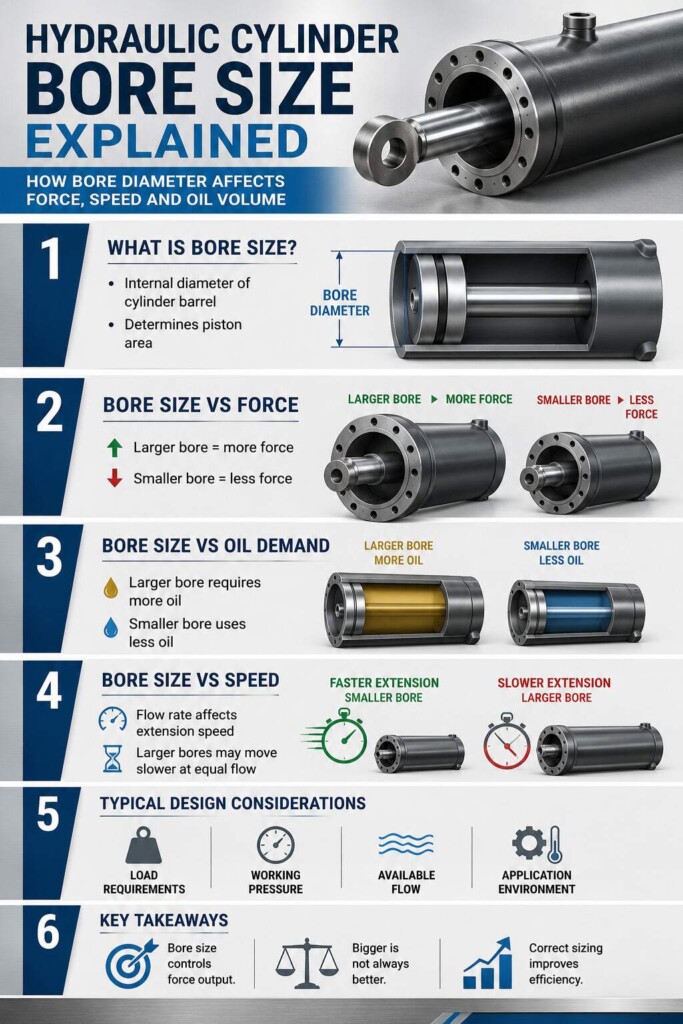
The bore determines the piston area available for hydraulic pressure to act upon. As bore size increases, force output increases. However, larger bores also require more hydraulic oil and may affect operating speed.
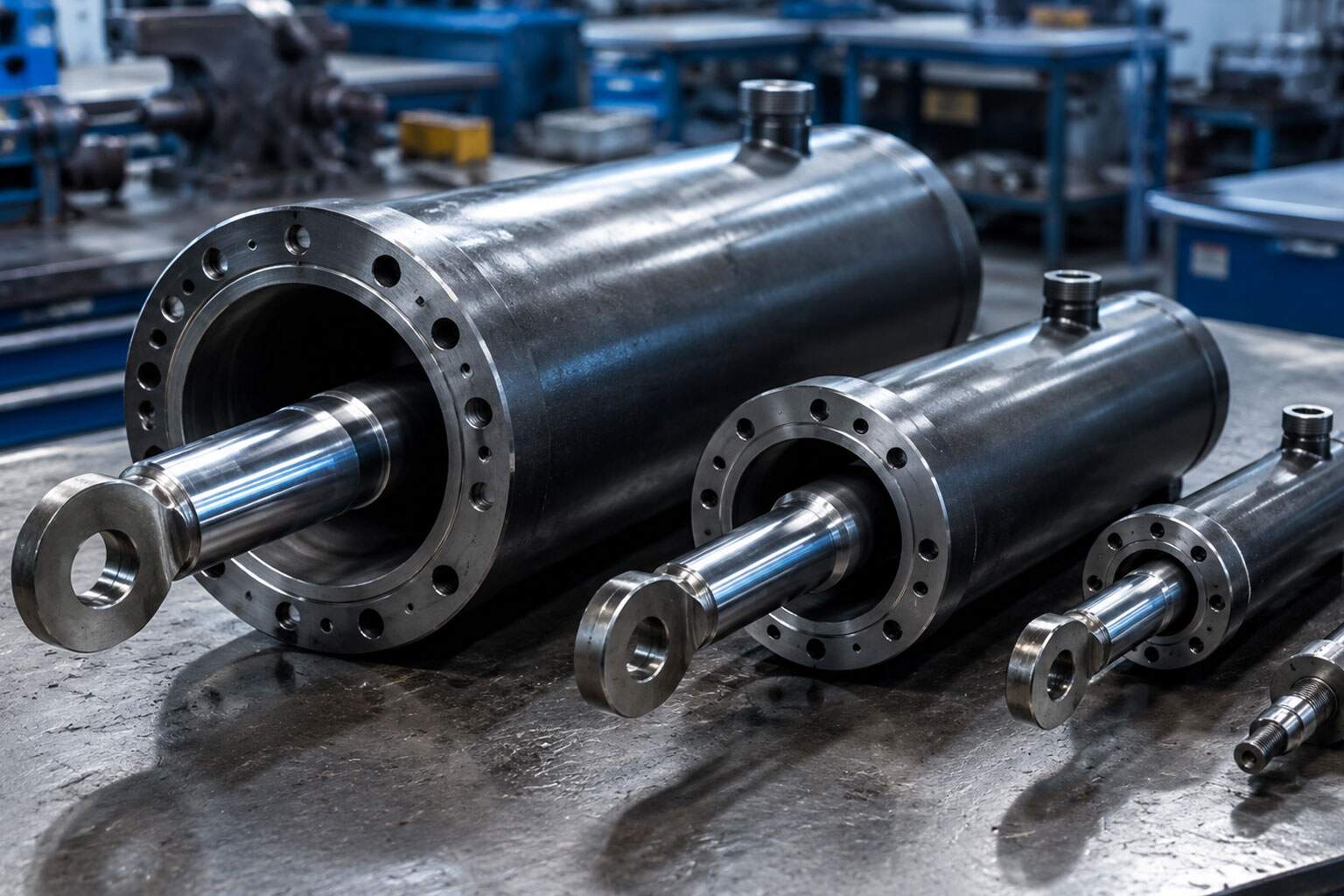
What Is Hydraulic Cylinder Bore Size?
The bore size is the internal diameter of the hydraulic cylinder barrel.
As hydraulic pressure acts on the piston surface, the piston area created by the bore determines how much force can be generated.
Quick Answer
Hydraulic cylinder bore size is the internal diameter of the cylinder tube. Larger bore diameters produce greater force but require more oil volume to operate.
Why Bore Size Matters
Force Output
A larger piston area allows hydraulic pressure to create more pushing force.
Oil Volume
Larger bores require more hydraulic oil to extend and retract.
System Efficiency
Correct bore sizing balances force requirements with flow demand.
Bore Size and Force Generation
Hydraulic cylinders generate force according to pressure acting on piston area.
At the same pressure:
- Small bore = lower force
- Large bore = higher force
- Very large bore = increased oil demand
- Incorrect sizing = reduced efficiency
Engineering Tip
Bigger is not always better. The ideal bore size provides sufficient force without unnecessarily increasing oil consumption and system size.
Common Hydraulic Cylinder Bore Sizes
Typical industrial bore sizes include:
- 25 mm
- 40 mm
- 50 mm
- 63 mm
- 80 mm
- 100 mm
- 125 mm
- 160 mm
- 200 mm and above
The correct choice depends entirely on the application, force requirement and available hydraulic pressure.
Not Sure Which Hydraulic Oil You Need?
Some machines require specialist or OEM-specific hydraulic oil. Using the wrong oil can cause serious damage.
Check Your Oil NowCommon Bore Size Selection Mistakes
Choosing Oversized Cylinders
Creates unnecessary oil demand and may slow machine operation.
Ignoring Working Pressure
Pressure and bore size must always be considered together.
Ignoring Future Loads
Future operating conditions should be considered during design.
Related Hydraulic Cylinder Guides
Frequently Asked Questions
What does hydraulic cylinder bore size mean?
The bore size is the internal diameter of the cylinder barrel.
Does a larger bore create more force?
Yes. A larger piston area allows hydraulic pressure to generate greater force.
Does bore size affect speed?
Yes. Larger bores require more oil volume and may move slower if flow remains unchanged.
Can a cylinder bore be too large?
Yes. Oversized cylinders increase oil demand and may reduce overall efficiency.