
Hydraulic Cylinder Sizing Guide (Bore, Stroke, Rod Diameter & Force)
A practical guide to choosing the correct hydraulic cylinder size for force, movement and reliability.
Correct hydraulic cylinder sizing is essential for safe lifting, pushing, pulling and controlled machine movement.
If a cylinder is too small, it may not produce enough force. If it is too large, it can slow the system down, increase oil demand and create unnecessary strain on hydraulic components.
What Affects Hydraulic Cylinder Size?
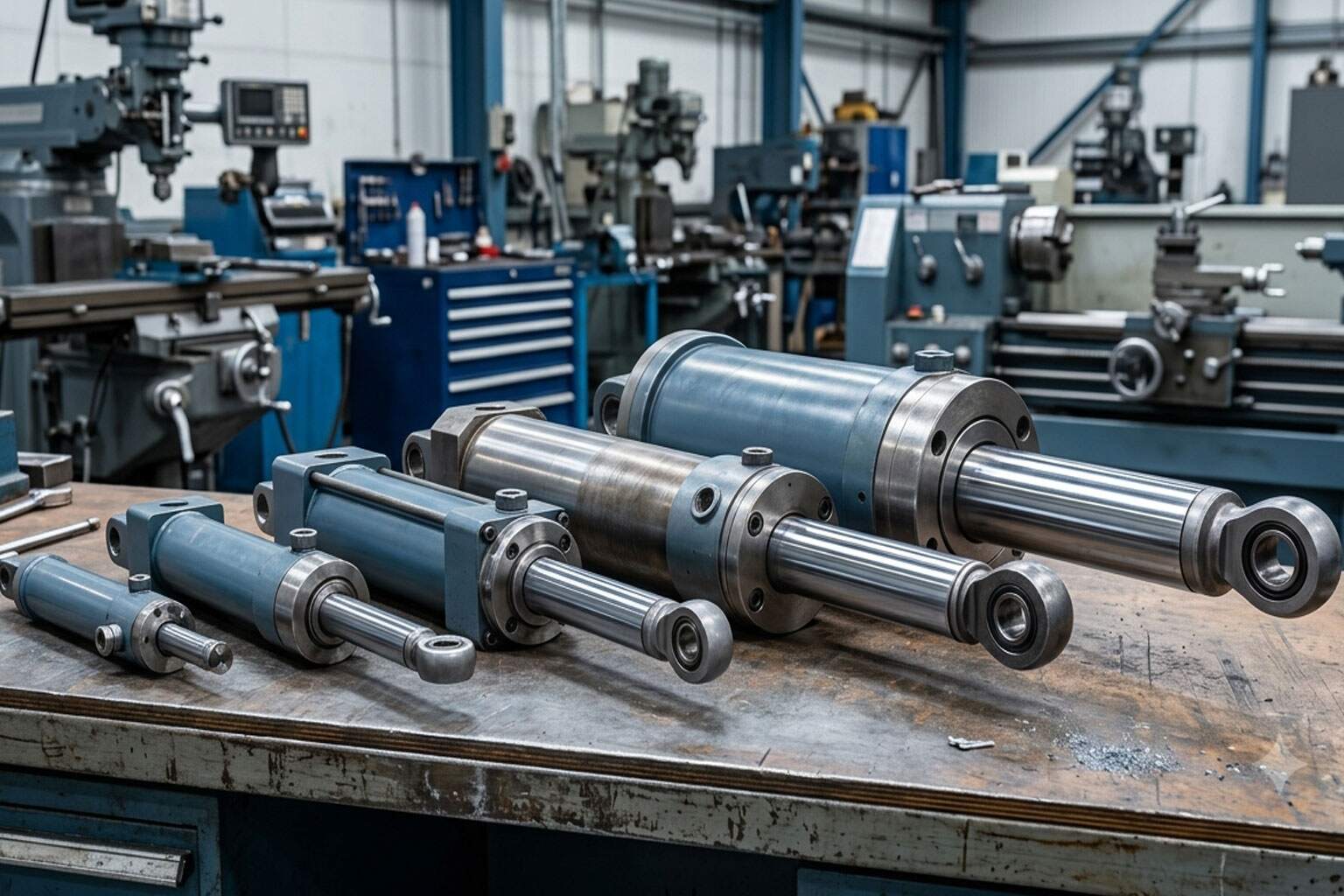
Hydraulic cylinder size is mainly determined by the amount of force required, the available working pressure and the movement distance needed by the machine.
The correct size should deliver the required performance without being unnecessarily large, slow or inefficient.
Quick Answer
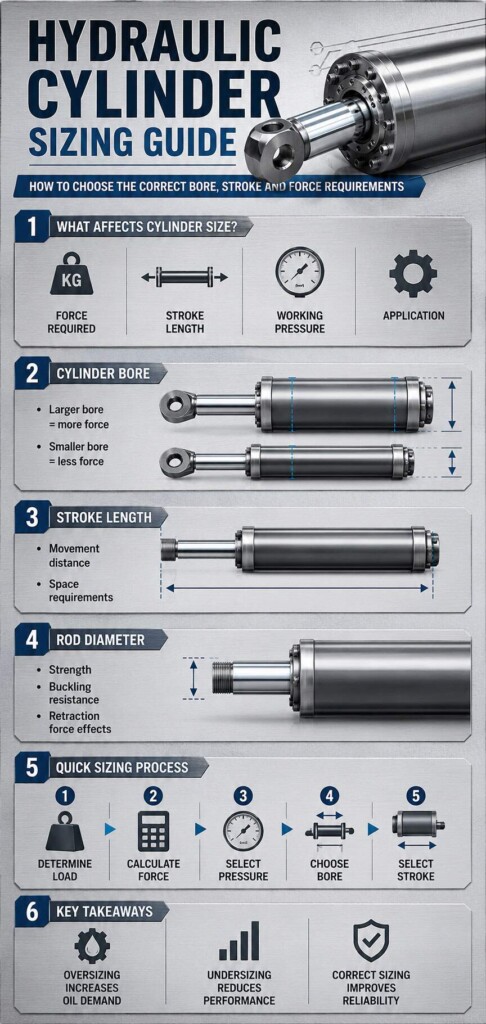
Hydraulic cylinder sizing depends on the force required, working pressure, bore size, stroke length, rod diameter, mounting style and application environment.
Core Hydraulic Cylinder Sizing Factors
Bore Size
The bore is the internal diameter of the cylinder barrel. A larger bore gives more piston area, which allows the cylinder to produce more force at the same pressure.
Stroke Length
Stroke length is the distance the rod travels between fully retracted and fully extended positions. It controls the movement range of the machine part.
Rod Diameter
Rod diameter affects strength, stability and resistance to bending or buckling, especially during pushing applications or long-stroke movements.
Force, Pressure and Cylinder Size
Hydraulic cylinder force is created by hydraulic pressure acting on piston area. Higher pressure and larger bore sizes generally produce more force.
Common sizing factors include:
- The load or weight being moved
- The angle of movement
- Friction in the system
- Available working pressure
- Required safety margin
- Whether the cylinder is pushing or pulling
Correct Sizing Improves Reliability
The right hydraulic cylinder size helps the machine operate smoothly, safely and efficiently without unnecessary pressure demand, oil flow demand or premature component wear.
For the technical principle behind this, see Hydraulic Cylinder Force & Pressure Explained.
Not Sure Which Hydraulic Oil You Need?
Some machines require specialist or OEM-specific hydraulic oil. Using the wrong oil can cause serious damage.
Check Your Oil NowHydraulic Cylinder Bore Size Explained
The cylinder bore is one of the most important sizing decisions. Bore size controls piston area, and piston area directly affects the force the cylinder can generate.
- Larger bore: more force, higher oil volume demand
- Smaller bore: less force, lower oil volume demand
- Oversized bore: may slow the system and increase flow requirements
- Undersized bore: may not move the load safely or efficiently
Stroke Length Explained
Stroke length controls how far the cylinder rod travels. It must match the actual movement required by the machine.
Too little stroke can restrict movement. Too much stroke can create mounting problems, instability or unnecessary component length.
Practical Point
Stroke length should be based on the required machine movement, not simply copied from an old cylinder unless the existing setup is already correct.
Rod Diameter and Buckling Risk
The piston rod must be strong enough to handle the load without bending or buckling. This is especially important when the cylinder is pushing, working at an angle or operating over a long stroke.
Rod diameter also affects retraction force in double acting cylinders because the rod reduces the effective working area on the rod side of the piston.
Related guide: Hydraulic Cylinder Rods Explained.
Quick Hydraulic Cylinder Sizing Process
A practical sizing process should move from the application requirement to the cylinder specification.
- Determine the load that needs moving
- Calculate the force required
- Confirm available system pressure
- Select the correct bore size
- Choose the correct stroke length
- Check rod diameter and buckling risk
- Confirm mounting style and available space
- Review safety margin and duty cycle
Application conditions also matter. See Hydraulic Cylinder Applications Explained for examples of how environment and usage affect cylinder design.
Common Hydraulic Cylinder Sizing Mistakes
Choosing by Physical Size Only
A cylinder may physically fit, but that does not mean it can deliver the required force safely.
Ignoring Working Pressure
Available system pressure is critical. Bore size and pressure must be considered together.
Overlooking Mounting and Alignment
Poor mounting can create side load, rod wear and premature seal failure even when the cylinder is correctly sized for force.
For more on alignment and installation, see Hydraulic Cylinder Mounting Types Explained.
When Cylinder Size Is Wrong
A poorly sized hydraulic cylinder can cause several performance and reliability problems.
- Slow machine movement
- Weak lifting or pushing force
- Hydraulic oil overheating
- Excessive pump demand
- Seal wear
- Rod bending
- Machine downtime
Some of these problems may eventually appear as failure symptoms. See Hydraulic Cylinder Troubleshooting Guide for fault-finding guidance.
Get Priority Hydraulic Support & Trade Pricing
Jump the queue, reduce downtime and pay less for parts, labour and callouts.
✔ Lower rates day and night
✔ Trade discounts on parts
✔ 30-day credit terms for approved accounts
Related Hydraulic Cylinder Guides
Frequently Asked Questions
What does hydraulic cylinder bore size mean?
Hydraulic cylinder bore size is the internal diameter of the cylinder barrel. A larger bore usually produces more force because pressure acts over a larger piston area.
What does stroke length mean on a hydraulic cylinder?
Stroke length is the distance the cylinder rod travels between fully retracted and fully extended positions.
Can a hydraulic cylinder be too large?
Yes. An oversized cylinder can increase oil demand, slow the system and create unnecessary strain on hydraulic components.
What happens if a hydraulic cylinder is too small?
A cylinder that is too small may not generate enough force to move the load safely or efficiently.
Why does rod diameter matter when sizing a cylinder?
Rod diameter affects strength, buckling resistance and retraction force, especially in double acting cylinders.
Need Help With Hydraulic Cylinder Sizing?
If you need help understanding bore size, stroke length, rod diameter or application suitability, ask a technical question and we will point you in the right direction.