
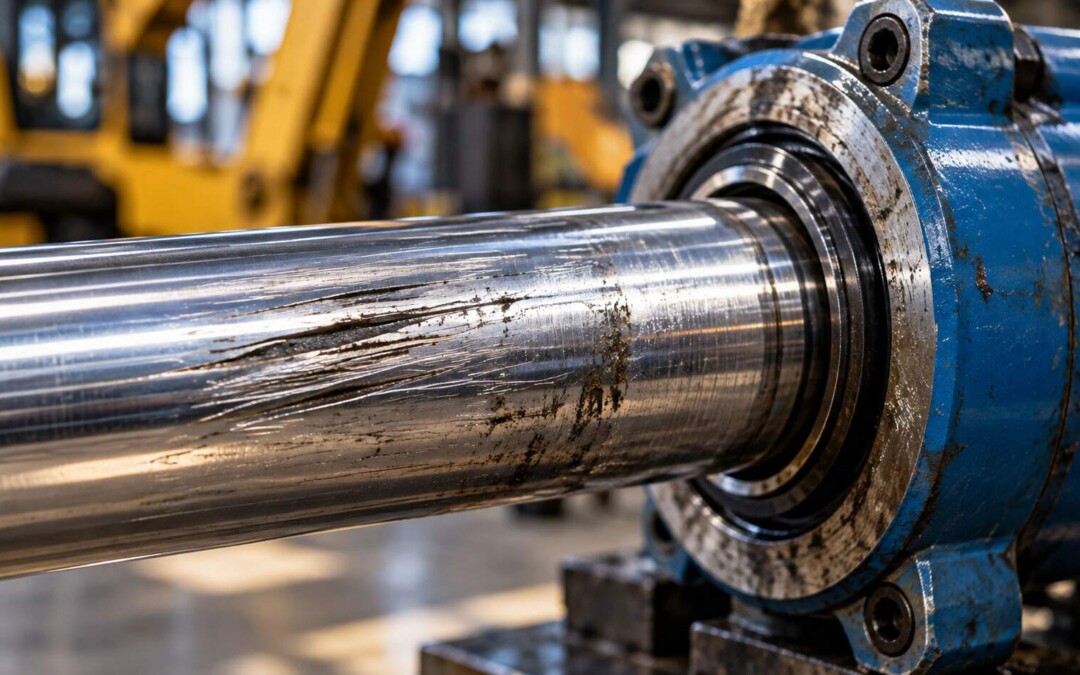
Hydraulic Cylinder Rod Scoring Explained
Understand what causes hydraulic cylinder rod scoring, how damaged rod surfaces affect
seals and leakage, when a scored rod may be repairable, and how to prevent the same
damage from returning.
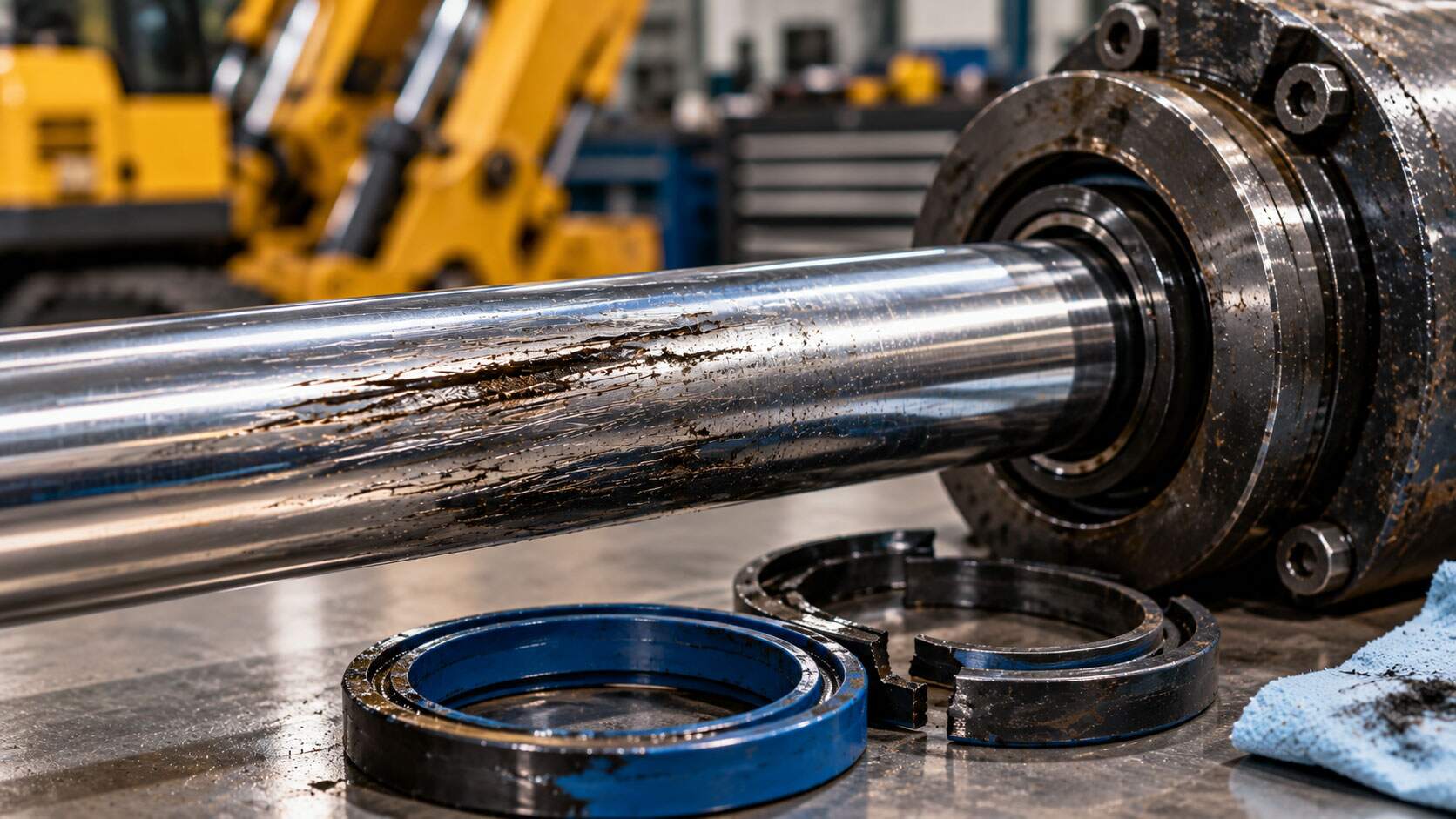
The piston rod is both a structural component and a precision running surface for the rod sealing system.
What is hydraulic cylinder rod scoring?
Hydraulic cylinder rod scoring is scratching, grooving or other
surface damage along the piston rod. It can be caused by contamination,
damaged bearings or wear rings, side-loading, misalignment, corrosion or
contact with damaged sealing components.
Because the rod passes repeatedly through the rod seal and wiper, scoring can
damage these components and create a path for external hydraulic oil leakage
and contamination entry.
In one sentence: a scored hydraulic cylinder rod should be treated
as both surface damage and a clue that another problem may be occurring inside
the cylinder or machine.
Why hydraulic cylinder rod condition matters
The rod does much more than transmit force. Its surface works directly with
the gland, rod seal, wiper and bearing system every time the cylinder moves.
Seal Performance
The rod seal runs directly against the rod surface. Grooves, pits and sharp
damage can wear or cut the sealing edge.
Contamination Control
The exposed rod travels back into the cylinder. Damage and contamination
on its surface can therefore affect components inside the actuator.
Cylinder Guidance
Uneven rod wear can provide evidence of side-loading, poor alignment or
inadequate guidance rather than a simple surface defect.
What does a scored hydraulic cylinder rod look like?
Rod damage varies from fine surface marks to deep longitudinal grooves. The position,
direction and severity of the damage can provide useful clues about how it developed.
Fine Scratches
Light longitudinal marks may indicate contamination passing through the wiper
or sealing area.
Deep Grooves
Deep scoring can indicate harder contamination, metal contact, damaged guidance
components or severe operating conditions.
Pitting or Corrosion
Corrosion damage can create an irregular surface that damages seals even when
there is no obvious long scoring line.
Inspection Clue
Scoring concentrated predominantly on one side of the rod or guidance components
can justify investigating cylinder alignment and side-loading rather than treating
the damage as normal wear.
What causes hydraulic cylinder rod scoring?
Rod scoring is often the visible result of another problem. Identifying that
problem is important if a repaired or replacement rod is expected to last.
1. Contamination
Dirt, grit and hard particles can become trapped around the wiper or seal and
scratch the rod as it moves.
2. Side-Loading
Forces acting sideways on the rod can overload guidance components and create
uneven contact, wear and scoring.
3. Misalignment
Poor cylinder or machine alignment can force the rod against its guidance
surfaces rather than allowing it to travel concentrically.
4. Worn Bearings or Wear Rings
Excessive clearance can allow unwanted movement and reduce the guidance that
keeps cylinder components correctly positioned.
5. Corrosion
Moisture and aggressive environments can attack the rod surface, producing
pits and rough areas that then damage sealing components.
6. Physical Impact
An exposed piston rod can be damaged by tools, debris, machinery or other
external contact while extended.
How contamination scores a hydraulic cylinder rod
The wiper is designed to reduce the amount of external contamination entering the gland area as the rod retracts. In harsh environments it can be exposed to dust, grit, mud and other abrasive material.
If particles become trapped between the rod and sealing components, repeated cylinder movement can drag them along the surface and create longitudinal scratches.
Internal contamination can also contribute to wear of piston, bearing and guidance components, potentially creating further damaging material inside the cylinder.
Look for Evidence Such As
- Long parallel scratches on the rod
- Damaged or hardened wiper
- Dirt around the gland area
- Contaminated hydraulic fluid
- Particles embedded in seals
- Scoring on other internal components
- Accelerated seal wear
How side-loading can damage a cylinder rod
Hydraulic cylinders are designed primarily to generate force along their operating
axis. Side forces can place additional loads on the rod, gland, bearings, piston
and barrel.
Uneven Bearing Wear
Side forces can concentrate loading on one area of the rod guidance system.
Rod-to-Gland Contact
Excessive movement or worn guidance can allow contact that damages the rod
surface and surrounding components.
Repeat Seal Failure
A seal replaced without correcting alignment or guidance problems may be
damaged again by the same operating condition.
Engineering Point
A replacement rod does not correct machine misalignment. If abnormal wear indicates
side-loading, the mounting arrangement and operating geometry should form part of
the investigation.
Why a scored rod can cause hydraulic oil leakage
Every time the cylinder extends and retracts, the damaged section of rod passes
through the rod sealing system. A rough or grooved surface can therefore affect
sealing repeatedly during normal operation.
Seal Edge Damage
Sharp scoring or surface defects can damage the sealing lip as it travels over the rod.
Leakage Paths
Deep longitudinal grooves can make it more difficult for the rod seal to maintain
consistent contact with the running surface.
Contamination Entry
Damage to the rod and wiper system can reduce the cylinder’s ability to keep
external contamination away from internal components.
Why Resealing Alone May Not Work
Installing a new rod seal against a badly damaged running surface can lead to another
leakage problem. The condition of the rod should be assessed as part of the repair.
Rod damage: what the symptoms may indicate
The appearance of the rod is only one part of the diagnosis, but different damage
patterns can help direct the next inspection.
| Observed Problem | Possible Cause | What Else to Inspect |
|---|---|---|
| Fine longitudinal scratches | Contamination around the wiper or seal | Wiper, seals and fluid cleanliness |
| Deep scoring | Hard contamination or mechanical contact | Gland, bearings, wear rings and internal components |
| Damage concentrated on one side | Possible side-load or alignment issue | Mountings, guidance and machine geometry |
| Pitting or rough corrosion | Environmental exposure or damaged protective surface | Operating environment and rod protection |
| Oil around the rod | Rod seal damage and/or damaged rod surface | Rod seal, wiper, gland and complete rod condition |
Can a scored hydraulic cylinder rod be repaired?
It depends on the depth and location of the damage, the rod dimensions, surface
treatment and the requirements of the cylinder. A proper assessment should determine
whether the rod remains suitable for continued service.
Minor Surface Damage
Some light surface defects may be recoverable if the final rod condition remains
suitable for the seal and cylinder specification.
Rod Refurbishment
Depending on construction and condition, specialist machining and restoration
processes may be considered as part of a cylinder rebuild.
Rod Replacement
Deep scoring, severe corrosion, dimensional problems or other significant damage
may make replacement the more appropriate repair route.
The Root Cause Still Matters
Repairing or replacing the rod without correcting contamination, misalignment,
side-loading or worn guidance components can allow the new surface to become damaged again.
How to reduce hydraulic cylinder rod scoring
Protect the Rod
Reduce unnecessary exposure to impact, debris and aggressive contamination where the application permits.
Maintain Wipers & Seals
Damaged wipers and sealing components should not be ignored when contamination is present around the rod.
Control Contamination
Hydraulic cleanliness and effective exclusion of external dirt help protect seals and precision surfaces.
Check Alignment
Investigate mounting or machine geometry where wear patterns suggest repeated side-loading.
Inspect Guidance
Bearings, wear rings and other guidance components should be assessed when abnormal movement or wear is found.
Investigate Early
Small rod marks, leakage or unusual wear can provide an early warning before more extensive cylinder damage develops.
Related hydraulic cylinder guides
Hydraulic Cylinder Rods Explained
Understand rod materials, surface condition, loading and cylinder performance.
Hydraulic Cylinder Troubleshooting
Diagnose leakage, scoring, slow movement and other common cylinder faults.
Why Hydraulic Cylinders Fail
Explore contamination, misalignment, wear and other causes of premature failure.
Tolerances & Machining
Learn how alignment, guidance, geometry and surface finish influence reliability.
Cylinder Failure Modes
Understand rod scoring, seal damage, barrel wear, corrosion and other failure patterns.
Rebuild vs Replacement
Understand the factors involved when deciding whether a damaged cylinder should be rebuilt or replaced.
Need a damaged hydraulic cylinder rod inspected?
Hydraulic Online explains the engineering behind cylinder damage and failure.
Completely Hydraulic provides practical workshop support for hydraulic cylinder
and ram repair, refurbishment, machining and manufacture.
Hydraulic cylinder rod scoring FAQs
What causes scoring on a hydraulic cylinder rod?
Possible causes include contamination, side-loading, poor alignment, worn guidance components, corrosion and physical damage to the exposed rod.
Can a scored hydraulic cylinder rod damage the seals?
Yes. Grooves, scratches, pits and rough areas can damage the rod seal and wiper as the damaged surface repeatedly passes through them.
Can rod scoring cause a hydraulic leak?
Rod scoring can contribute to external leakage by damaging the rod seal or preventing consistent sealing against the rod surface.
Can a scored hydraulic cylinder rod be repaired?
It depends on the depth and extent of the damage, rod dimensions, surface treatment and cylinder requirements. Severe damage may require rod replacement.
Why does a hydraulic cylinder keep scoring rods?
Repeated scoring can indicate that the underlying cause has not been corrected. Contamination, side-loading, misalignment and worn guidance components should be investigated.
Should a damaged rod be replaced when a cylinder is resealed?
Not automatically. The rod should be inspected and assessed against the requirements of the cylinder. Significant surface or dimensional damage may require repair or replacement before new seals are fitted.
Rod scoring is damage — but it can also be evidence
Finding out why the rod became damaged can be just as important as repairing the
surface itself. Contamination, alignment, guidance and operating conditions should
all be considered when investigating repeat cylinder failures.