
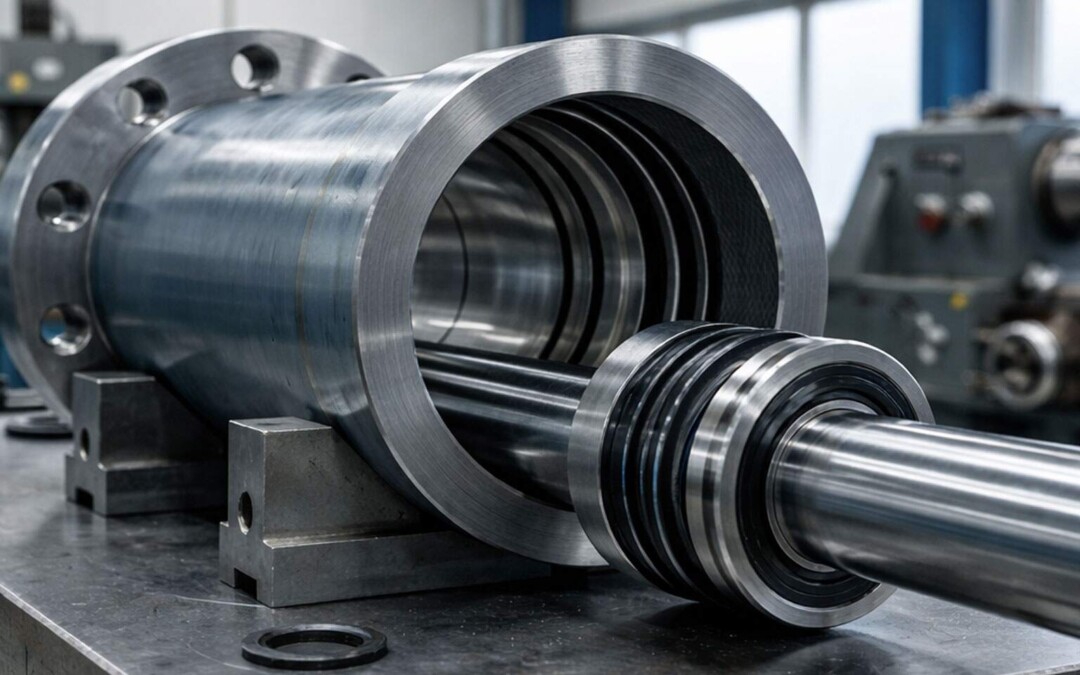
Hydraulic Cylinder Assembly Explained (Components, Process & Performance)
A practical guide to how hydraulic cylinders are assembled and how each component works together.
A hydraulic cylinder only performs correctly when every component is assembled with precision and alignment.
From the barrel to the seals, each part plays a critical role in pressure control, movement and reliability.
What is a Hydraulic Cylinder Assembly?
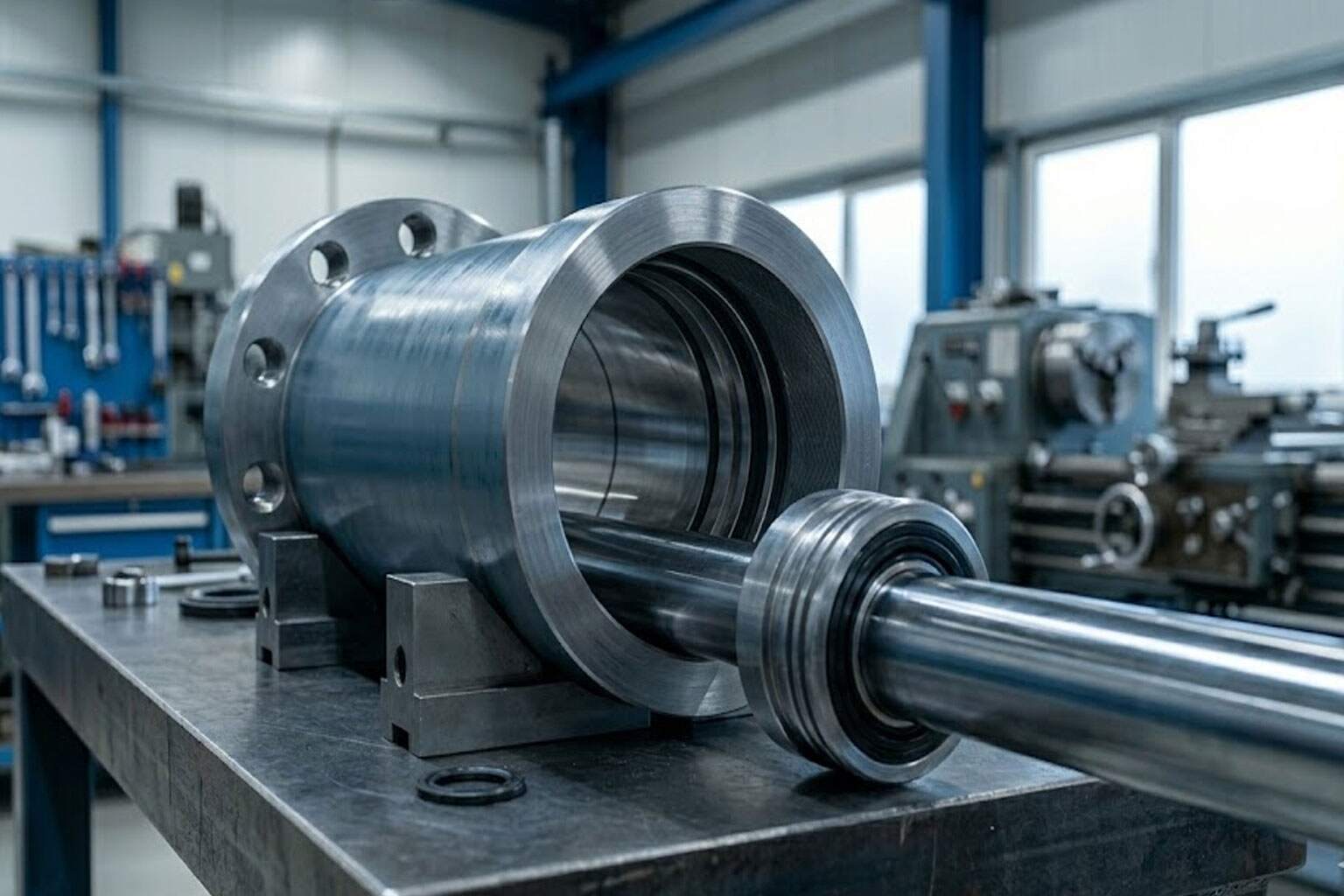
A hydraulic cylinder assembly is the complete unit made up of multiple precision components working together to generate linear force.
Each component must be correctly installed, aligned and sealed to ensure performance under pressure.
Core Components in an Assembly
- Cylinder barrel (honed tube)
- Piston and sealing system
- Piston rod
- Gland and rod seals
- End caps or cylinder head
How a Hydraulic Cylinder is Assembled
Step 1 – Barrel Preparation
The honed tube is cleaned and inspected to ensure surface finish and tolerances are correct.
Step 2 – Piston Assembly
The piston is fitted with seals and wear rings before being attached to the piston rod.
Step 3 – Rod Insertion
The piston and rod assembly is carefully inserted into the cylinder barrel.
Step 4 – Gland Installation
The gland is fitted with seals and installed to guide and seal the piston rod.
Step 5 – End Cap Securing
End caps or cylinder heads are secured to seal the system and contain pressure.
Why Assembly Quality Matters
Incorrect assembly can lead to serious performance issues.
- Seal damage during installation
- Contamination inside the cylinder
- Misalignment of components
- Premature wear and leakage
Many of these issues are covered in detail in
Hydraulic Cylinder Failure Modes.
Need Help Building or Repairing a Cylinder?
Correct assembly is critical to performance, safety and longevity.